Ligasure Vessel Sealing
The global vessel sealing market is dominated by a handful of major brands. This guide explains the competitive landscape, why certain manufacturers lead, and — most importantly — how to evaluate a vessel sealing supplier when you are sourcing for your brand, your hospital, or your distribution network.
LigaSure™ is a registered trademark of Medtronic. It refers to a family of advanced bipolar vessel sealing devices. This article uses the term “ligasure vessel sealing” as a generic technology descriptor and is not affiliated with, endorsed by, or connected to Medtronic in any way.
The Global Large Vessel Sealing Market: Who Leads and Why
The advanced bipolar vessel sealing device market is one of the most concentrated segments in surgical instruments. A small number of multinational corporations control the vast majority of global revenue, and the competitive dynamics that produced this outcome are worth understanding — whether you are a hospital procurement director, a distributor evaluating product lines, or a brand owner planning to enter this space.
The Major Players
Three groups of manufacturers define this market:
- Medtronic (LigaSure) — the category creator and dominant global leader. LigaSure instruments run on Medtronic’s Valleylab™ energy platforms (LS10™, FT10™, Force Triad™) and are the reference standard against which every competing product is measured.
- Ethicon / Johnson & Johnson (ENSEAL™) — the second-largest player in advanced energy devices. ENSEAL is Ethicon’s bipolar vessel sealing line, designed to compete directly with LigaSure on clinical performance.
- Chinese manufacturers (including H Group Med) — a growing group of factories producing compatible vessel sealing instruments and, increasingly, complete systems. These manufacturers serve OEM/ODM customers, distributors building their own brands, and hospitals seeking cost-effective alternatives to the incumbent platforms.
Why LigaSure Occupies the Global Mainstream
Medtronic’s dominance is not accidental. It rests on three structural advantages:
First-mover advantage and clinical evidence. LigaSure was introduced in the late 1990s. Over 25 years, Medtronic has accumulated the largest body of published clinical data on bipolar vessel sealing — hundreds of peer-reviewed studies, surgical society guidelines that reference LigaSure by name, and training programs embedded in residency curricula worldwide. For a surgeon choosing a vessel sealing device, LigaSure is the default. Switching requires a reason.
Platform lock-in. LigaSure instruments are designed for Medtronic’s generators, which are expensive capital equipment installed in hospitals as long-term assets. Once a hospital has invested in a Valleylab platform, the economic logic favors buying compatible consumables. This creates a durable installed-base advantage that competitors must work around.
Vertical integration. Medtronic controls the generator, the instrument, the algorithm, and the surgeon training pipeline. That integration means the sealing cycle is optimized end-to-end — the generator’s impedance-sensing algorithm is tuned to the exact electrical characteristics of LigaSure instruments. No third-party instrument maker can replicate that closed-loop optimization without access to the generator’s firmware.
Why ENSEAL Has Not Overtaken LigaSure
ENSEAL is a technically capable product line, but Ethicon faces a structural problem that has limited its market share in vessel sealing: its ultrasonic scalpel business (Harmonic™) and its bipolar sealing business (ENSEAL) compete for the same clinical applications and the same budget line.
Here is the problem in practical terms. A surgical department evaluating energy devices wants to compare competing technologies — ultrasonic versus bipolar — to decide which is better suited for its case mix. If both ultrasonic and bipolar devices come from the same manufacturer, the comparison becomes internal rather than competitive. The hospital cannot independently benchmark an Ethicon ultrasonic scalpel against an Ethicon ENSEAL sealer and reach an objective conclusion, because the clinical claims come from a single corporate source with a single commercial interest.
In contrast, Medtronic’s LigaSure is almost purely a bipolar sealing platform. Medtronic does not market a competing ultrasonic scalpel in the same clinical space. This means a hospital can standardize on LigaSure for vessel sealing and independently choose the best ultrasonic platform from another manufacturer — without creating an internal competitive conflict. That neutrality is a significant procurement advantage.
For distributors and brand owners, this dynamic is a strategic signal. The market does not need another manufacturer that offers both ultrasonic and bipolar devices under one roof and asks customers to compare them. It needs manufacturers who can deliver deep expertise in one technology and do it exceptionally well.
How to Evaluate a Vessel Sealing Supplier
If you are a brand owner, distributor, or hospital procurement team evaluating a vessel sealing manufacturer, here are the five criteria that actually matter — and the questions that separate serious factories from trading companies.
Criterion 1: Manufacturing and R&D Capability
The first mistake buyers make is evaluating a factory based on how long it has been selling, how many markets it has entered, or how polished its showroom looks. None of those indicators tell you whether the factory can engineer a product that will perform reliably in an operating room.
What matters is technical depth:
- Patent portfolio. Does the factory hold its own patents on core sealing technology — jaw design, electrode geometry, insulation methods, generator algorithms? Patents are evidence of independent R&D investment, not marketing. A factory with zero patents is a factory that copies; it cannot innovate when your application requires something different.
- R&D team composition. How many engineers? What are their backgrounds? Are they electrical engineers who understand RF energy delivery, or are they mechanical engineers who understand jaw machining? The best vessel sealing manufacturers have both.
- Testing infrastructure. Does the factory have in-house burst-pressure testing, thermal spread measurement, and accelerated life-cycle testing? Or does it send samples to third-party labs and wait weeks for results? In-house testing capability is a proxy for how fast the factory can iterate during product development.
At H Group Med, we hold 3 core patents on bipolar vessel sealing technology — covering the sealing instrument’s jaw mechanism, the electrode configuration, and the integrated handle design. Our R&D team includes electrical, mechanical, and materials engineers dedicated to electrosurgical device development. You can see our electrosurgical instrument line for the products these capabilities produce.
Criterion 2: Depth of Technical Exchange
When you approach a supplier with a custom requirement — a modified jaw length, a specific generator compatibility requirement, a new packaging specification for a regulated market — what happens next tells you everything about the factory.
A trading company will take your specification, forward it to a factory, and relay the factory’s response back to you. The communication is slow, the technical understanding is shallow, and the factory’s ability to suggest improvements is lost in translation.
A factory with genuine technical capability will do something different. Its engineers will sit down with you, review your requirements, and tell you why a particular design choice matters. If your pain point is deep customization — building a product line tailored to your specific market — then an OEM/ODM factory with direct engineering capability is the right partner, not a trading intermediary.
A technically strong factory can also articulate the engineering advantages of established products. It can explain why Medtronic’s jaw geometry produces consistent compression, why the impedance-sensing algorithm terminates at a specific inflection point, and how those design choices translate into burst pressure and thermal spread numbers. That level of technical exchange is impossible if the factory itself does not understand the underlying physics.
Criterion 3: Registration Capability and Global Regulatory Understanding
If your goal is to register a vessel sealing device in a specific market — Saudi Arabia, Thailand, Indonesia, Brazil, Russia, or anywhere else — then your choice of manufacturer directly affects how fast and how smoothly that registration proceeds.
Here is why. Regulatory submissions require detailed technical documentation: design specifications, biocompatibility test reports (ISO 10993), sterilization validation, electrical safety testing (IEC 60601-1), performance data, and manufacturing quality system records (ISO 13485). A factory that has supported registrations in multiple markets will have this documentation ready, organized, and formatted for different regulatory frameworks. A factory that has never supported a registration will need to create it from scratch — and will make mistakes that delay your timeline by months.
Beyond documentation, the factory’s scale and stability matter. Regulatory authorities increasingly audit manufacturing sites as part of the registration process. A factory with a certified cleanroom, documented production processes, and an established quality management system will pass those audits. A workshop-scale operation will not.
H Group Med manufactures under a full ISO 13485 quality management system and holds CE marking for the European market. We have supported product registrations in over 50 countries and markets, including Saudi Arabia (SFDA), Thailand (TFDA), Indonesia (BPOM), Russia, Brazil (ANVISA), and multiple Middle Eastern and Southeast Asian jurisdictions. Our turnkey factory solutions include end-to-end regulatory documentation support, so your registration timeline is not held up by missing or incomplete technical files.
Criterion 4: Price Competitiveness and Production Capacity
In the vessel sealing market, price competition is intensifying. As more hospitals and governments push for cost containment, the per-case cost of consumables — sealing instruments, disposable handpieces — is under pressure everywhere, not just in price-sensitive emerging markets.
A factory that can offer OEM production at scale has a structural cost advantage. Vertical integration — controlling injection molding, metal machining, electrode fabrication, assembly, and sterilization in-house — eliminates supplier margins at every stage. That cost structure translates directly into better pricing for your brand, and more room to compete against incumbent products on price without sacrificing quality.
Production capacity also matters. A factory running at 80% utilization can absorb your volume growth. A factory at 95% utilization will become a bottleneck. Ask for current capacity numbers and future expansion plans. A serious factory will share this data transparently.
Criterion 5: Patent Navigation and Compliance Capability
This is the criterion that most buyers underestimate — and the one that creates the most serious legal and commercial risk if handled poorly.
The advanced bipolar vessel sealing market is covered by a dense web of patents held by Medtronic, Ethicon, and other incumbents. Any new entrant — any new instrument design, any new jaw geometry, any new generator algorithm — must navigate this patent landscape without infringing valid claims. In markets like the United States and Europe, patent enforcement is aggressive and well-funded. A single infringement claim can result in import bans, product seizures, and damages that destroy a distribution business.
A competent manufacturer will have invested in freedom-to-operate (FTO) analysis for its core product designs. It will be able to show you which patents its designs avoid and how — not just assert that the product is “patent-free” with no supporting evidence. It will also have a strategy for staying ahead of new patent filings as incumbents expand their claims.
At H Group Med, we have accumulated a substantial library of patent navigation solutions covering the major vessel sealing patent families. Our engineering team designs each new instrument with patent avoidance as a primary constraint, not an afterthought. For our OEM partners entering regulated markets, we provide the technical documentation needed to demonstrate non-infringement as part of the registration file. In markets where patent enforcement is strict, this capability is not optional — it is the difference between a product that can be legally sold and one that cannot.
Why Choose H Group Med
The five criteria above are not abstract — they are the framework we use to position ourselves in the global market. Here is what that looks like in practice:
- 10+ years of OEM/ODM experience manufacturing vessel sealing instruments and electrosurgical devices for brands across the Middle East, Southeast Asia, Russia, South America, and Europe.
- 50+ global brand partnerships — we currently manufacture vessel sealing systems for over 50 brands worldwide, each with its own packaging, labeling, and regulatory requirements.
- 3 core patents on bipolar vessel sealing technology, covering jaw mechanism, electrode design, and handle integration.
- CE marking and ISO 13485 certification — our quality management system meets the requirements of the European MDR and is audited by notified bodies.
- Full OEM/ODM/SKD/CKD and technology transfer capability — from custom instrument design to complete production line setup in your market, we support every collaboration model.
- Global registration support across Saudi Arabia (SFDA), Russia, Thailand (TFDA), Indonesia (BPOM), Brazil (ANVISA), and 45+ additional markets. We provide the technical files, test reports, and quality documentation that regulatory authorities require.
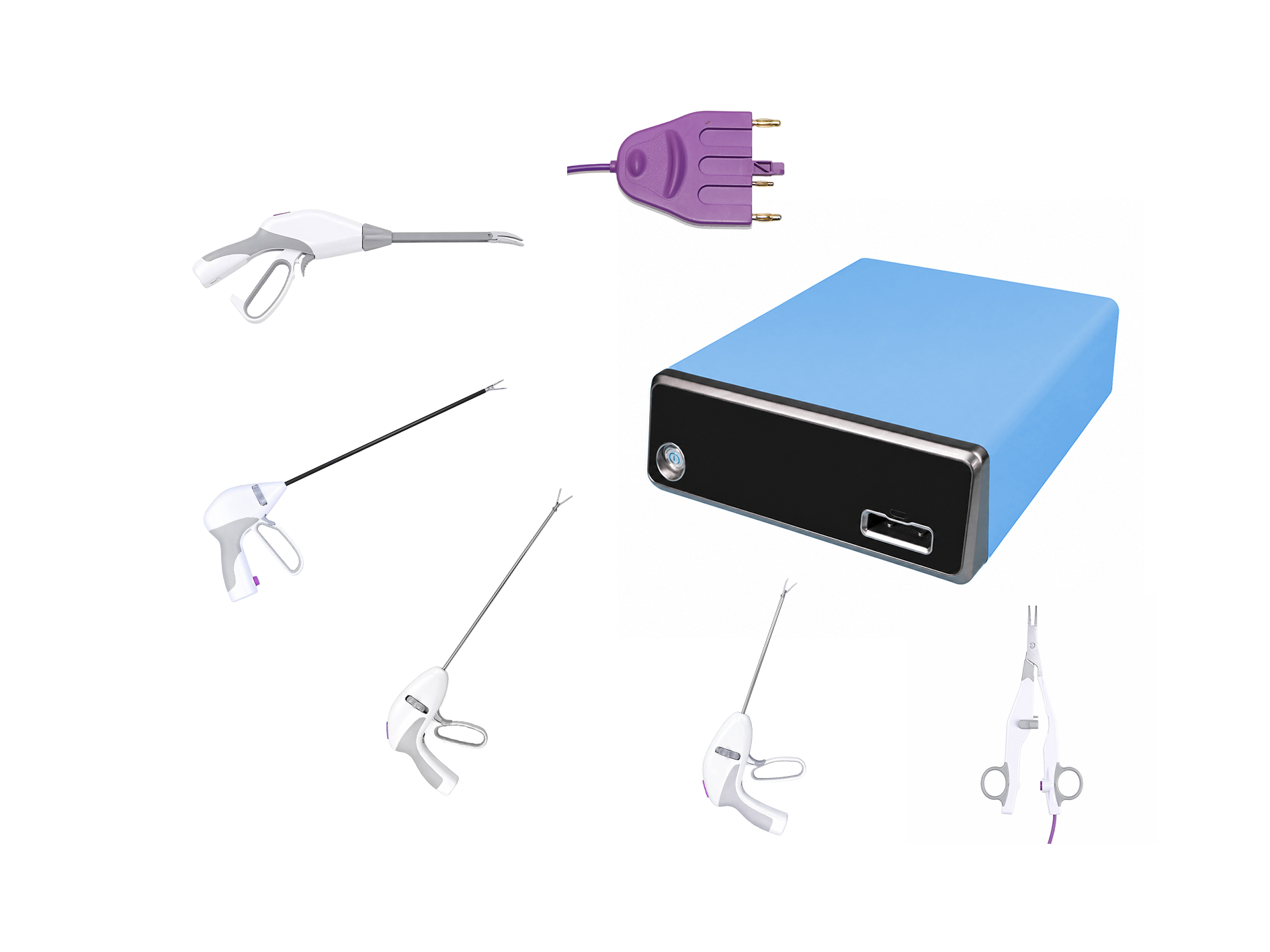
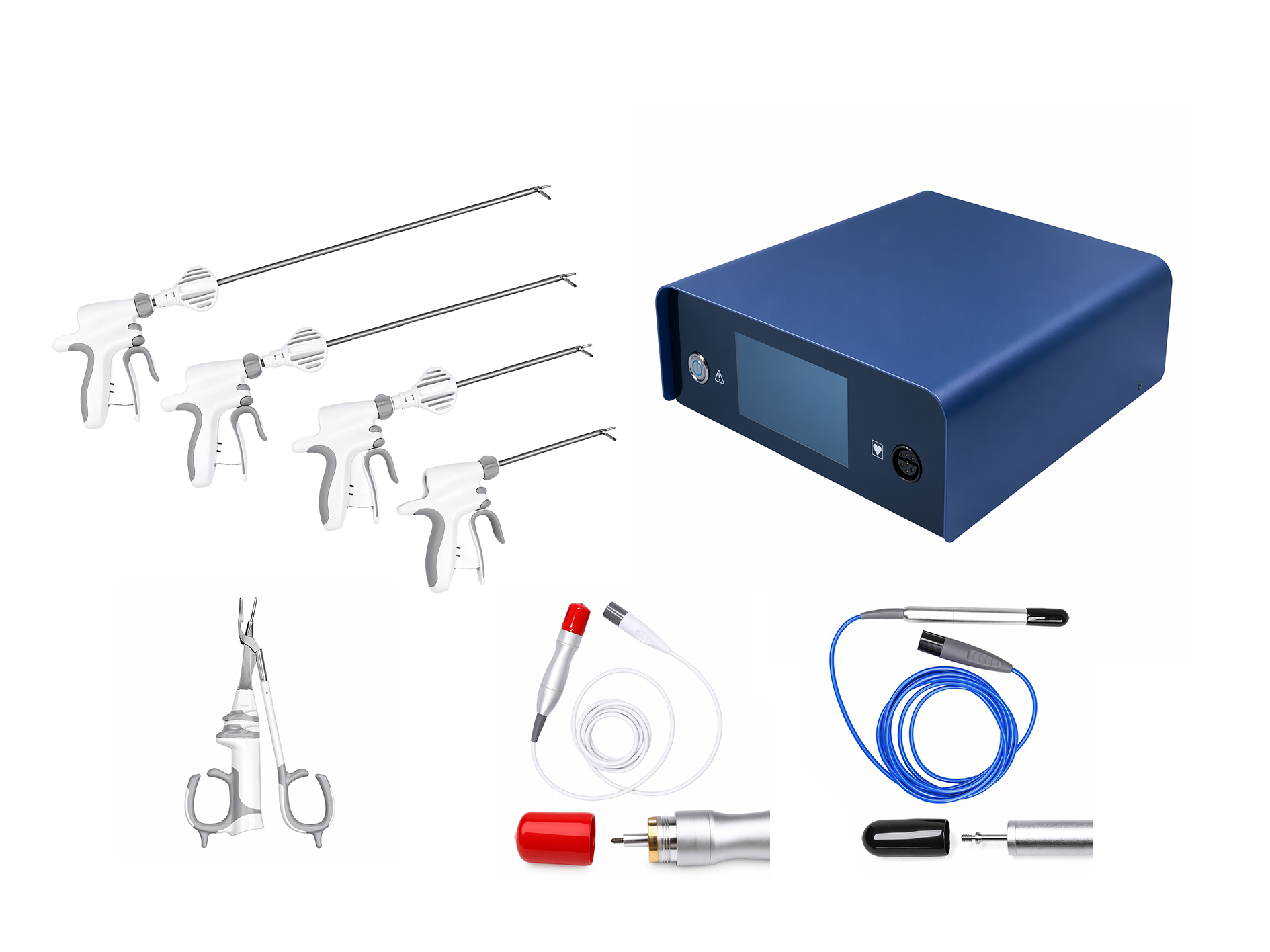
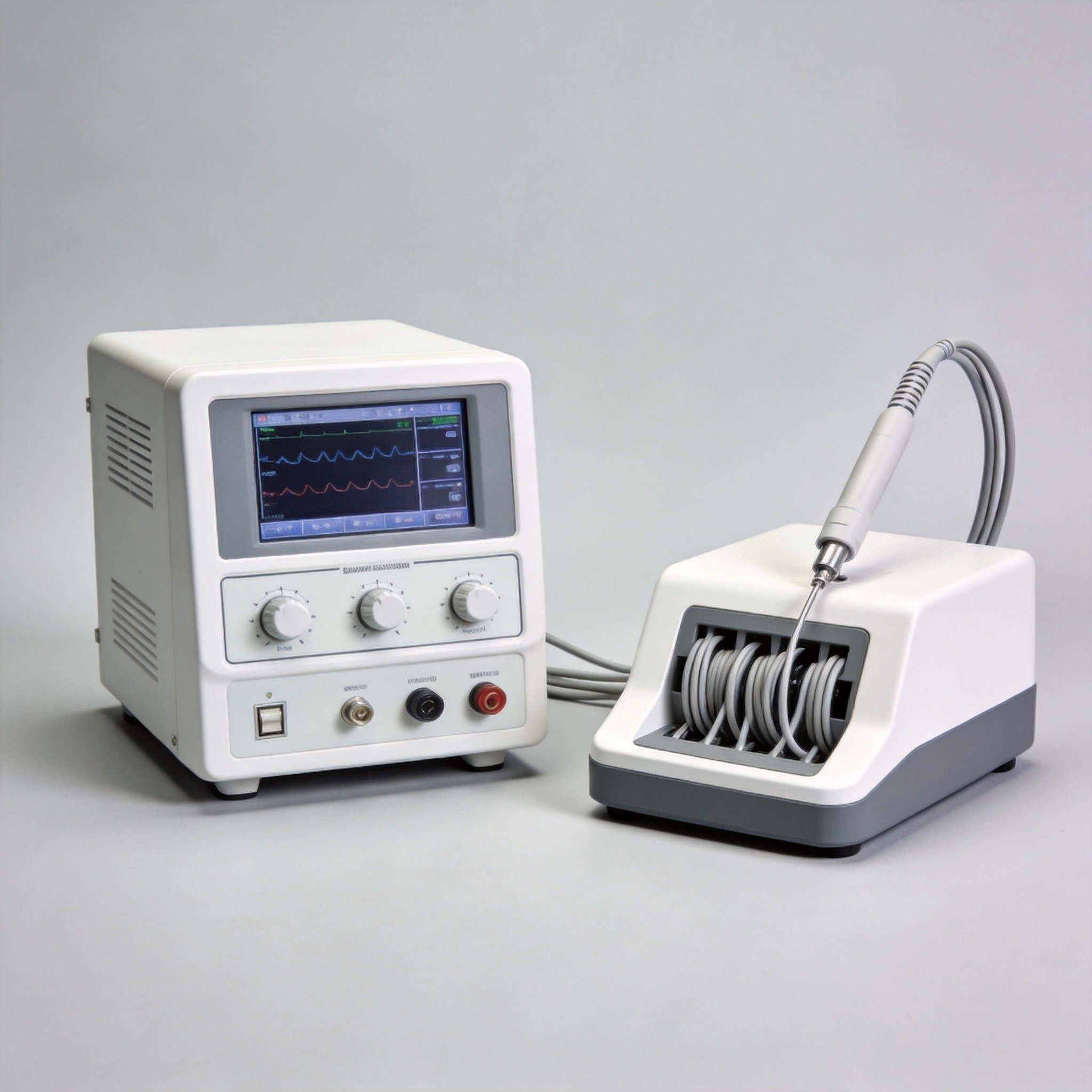
Our product line includes vessel sealer systems compatible with Medtronic generators, ultrasonic scalpel systems, and our 3-in-1 power generator that integrates vessel sealing, ultrasonic, and monopolar/bipolar modes in a single platform.
The Bottom Line
The vessel sealing market rewards manufacturers who invest in real engineering, real patents, real regulatory capability, and real production scale. Trading companies and copy-and-paste factories cannot deliver on any of these dimensions — and in a market where clinical performance, legal compliance, and registration speed are all on the line, the gap between a serious factory and a superficial one is not a small one.
If you are evaluating a vessel sealing partner for your brand, your distribution network, or your hospital group, the question is not whether the instrument looks right. The question is whether the manufacturer behind it has the technical depth, the patent strategy, the regulatory track record, and the production capacity to support your business for the next decade.
Contact our team to discuss your requirements, request technical documentation, or begin the evaluation process.
H-group Original Article — Strictly reproduced with attribution. LigaSure™, Valleylab™, LS10™, FT10™, Force Triad™ are trademarks of Medtronic. ENSEAL™ and Harmonic™ are trademarks of Ethicon (Johnson & Johnson). This article is for educational purposes and does not constitute medical advice. H Group Med is not affiliated with, endorsed by, or connected to Medtronic or Ethicon.