Understanding the Valleylab™ LS10™ Energy Platform: Technical Standards That Define Single-Channel Vessel Sealing Generators
In modern electrosurgery, not every operating room needs a Swiss-army-knife platform. Many surgical departments — especially in high-volume general surgery, gynecology, and colorectal centers — prefer a dedicated vessel sealing generator: one device, one job, done exceptionally well.
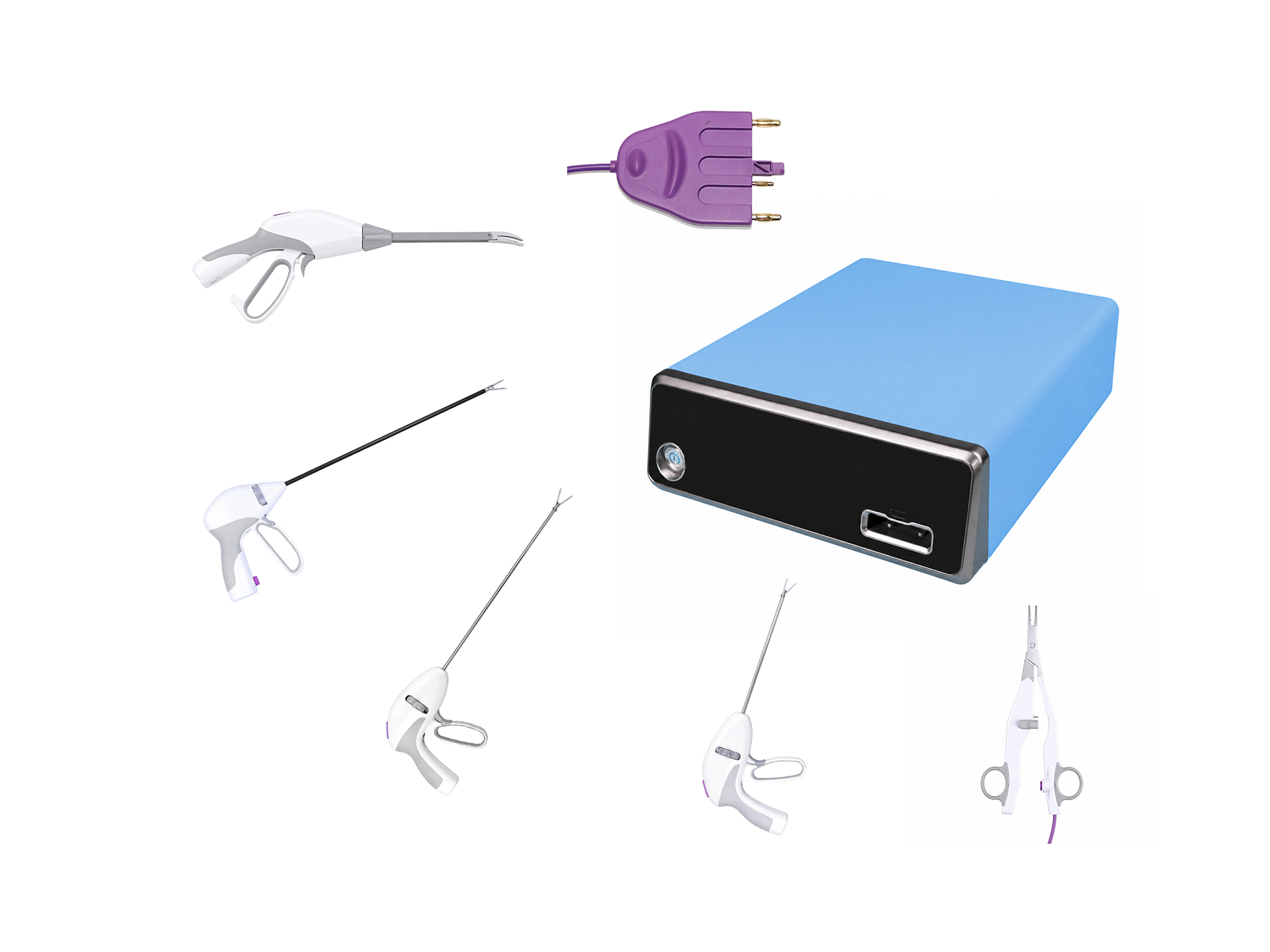
The Valleylab™ LS10™, manufactured by Medtronic (formerly Covidien), is exactly that kind of device. It is a single-channel vessel sealing generator purpose-built for LigaSure™ tissue fusion technology. Unlike multi-mode platforms that share resources across monopolar, bipolar, and ultrasonic channels, the LS10™ dedicates its entire power architecture to one clinical task: reliably sealing vessels up to 7 mm in diameter.
Understanding the LS10™'s technical architecture reveals the engineering principles that define the entire category of dedicated vessel sealing generators — and the benchmarks that compatible manufacturers must meet.
1. What Is the Valleylab™ LS10™?
The LS10™ is part of Medtronic's Valleylab™ LS Series, designed specifically for LigaSure™ and BiZact™ vessel sealing instruments. Key characteristics include:
- Single-channel output — one LigaSure™ instrument at a time, no mode-switching
- Dedicated vessel sealing mode — optimized exclusively for tissue fusion
- Auto-detection — RFID-based instrument recognition at 13.56 MHz, automatically configuring generator parameters
- Isolated (floating) CF-type output — safe for cardiac-adjacent procedures per IEC 60601-1
- Compact form factor — 300 × 377 × 105 mm, weighing only 5 kg
The LS10™ supports two instrument families:
- LigaSure™ instruments — for vessels and tissue bundles up to 7 mm diameter
- BiZact™ instruments — for vessels up to 3 mm diameter, using the same energy delivery principle
The generator automatically detects which instrument type is connected and adjusts its energy profile accordingly — no manual configuration needed.
2. Output Architecture: 270W of Adaptive RF Energy at 400 kHz
The LS10™'s output specifications define the performance envelope for single-channel vessel sealing:
| Parameter | Value | Clinical Significance |
|---|---|---|
| Output frequency | 400 kHz | Optimal for tissue fusion without neuromuscular stimulation |
| Maximum output power | 270W at 30Ω | Sufficient for sealing large vessels with dense tissue |
| Open-circuit peak voltage | 250V | Safety limit for instrument insulation rating |
| Open-circuit P-P voltage | 500V | Peak-to-peak ceiling during high-impedance phases |
| Maximum RMS current | 5.5A | Current delivery capacity for low-impedance tissue |
| Rated load | 30Ω | Standard test load matching typical tissue impedance |
| Duty cycle (max output) | 5s on / 15s off | Thermal management at continuous maximum power |
The power-versus-impedance curve tells an important story. At the rated 30Ω load, the generator delivers its full 270W nominal output. But as tissue impedance changes during the sealing cycle — starting low (vascular, moist tissue) and rising as water is expelled and collagen denatures — the generator continuously adjusts voltage and current to maintain optimal energy delivery:
- At 5Ω (initial contact): ~107W — gentle energy onset
- At 10Ω: ~186W — ramping up
- At 20Ω: ~251W — approaching peak
- At 30Ω (rated): ~262W — maximum sustained output
- At 50Ω (mid-seal): ~245W — maintaining as impedance rises
- At 200Ω (late seal): ~89W — tapering as seal completes
- At 1000Ω (post-seal): ~20W — minimal residual energy
This is not a fixed-power generator. It is an adaptive energy delivery system — the RF output is continuously modulated based on real-time tissue impedance measurements.
3. The Core Technology: Tissue Impedance Feedback and Adaptive Energy Control
The LS10™'s sealing algorithm works on a principle that is now industry-standard but was pioneered by Covidien's engineering team:
- Clamp tissue — the surgeon grasps the vessel with the LigaSure™ instrument jaw
- Begin RF delivery — the generator starts delivering controlled bipolar RF energy at 400 kHz
- Monitor impedance continuously — as tissue heats, water is expelled, and collagen begins to denature, impedance rises predictably
- Adapt energy in real time — the generator adjusts voltage and current to maintain the optimal rate of impedance change
- Detect seal completion — when impedance reaches a predetermined threshold (indicating complete collagen fusion), the generator terminates energy delivery
- Audio confirmation — a distinctive dual-pulse tone (985 Hz) signals seal completion
The entire sealing cycle typically completes in 2–7 seconds, depending on tissue thickness and composition. The system is designed to produce seals with:
- Minimal adhesion — tissue does not stick to the electrode
- Minimal charring — energy is precisely controlled to avoid carbonization
- Minimal lateral thermal spread — heat is confined to the seal zone
This is fundamentally the same engineering approach used by every modern vessel sealing generator on the market — including those manufactured by H Group Med.
4. Safety Architecture: CF-Type Isolated Output
The LS10™ is classified as a CF-type (Cardiac Floating) device per IEC 60601-1. This is significant because:
- Isolated (floating) output — the LigaSure™ circuit has no direct electrical path to earth ground, preventing stray current from reaching the patient through alternative pathways
- Ultra-low leakage current — high-frequency leakage current is limited to <116 mA RMS at the instrument terminals and <100 mA RMS at the system terminals, per IEC 60601-2-2
- Low-frequency isolation — 50/60 Hz leakage current is limited to <10 μA (normal conditions) and <50 μA (single-fault condition)
The generator also includes:
- ECG blanking port — synchronizes with external electrosurgical units to prevent RF interference with cardiac monitoring
- Automatic fault detection — continuous self-diagnostics with visual (LED indicators) and audible alarms
- RFID instrument verification — validates instrument authenticity and compatibility before enabling energy delivery
- Stuck switch detection — alerts if the activation switch is stuck in the engaged position
These safety features are not unique to the LS10™ — they represent the baseline safety standard that any modern vessel sealing generator must meet.
5. Connectivity and Instrument Intelligence
Despite its compact form factor, the LS10™ incorporates several modern features:
- RFID at 13.56 MHz — each LigaSure™ instrument carries an RFID tag that the generator reads to automatically configure output parameters. This ensures that each instrument type receives the correct energy profile, eliminating manual programming errors
- USB Type-B serial port — enumerated as a COM port at 115200 bps, used for data logging, service diagnostics, and firmware updates
- Foot switch support — compatible with the LS0300 (purple) foot switch for hands-free activation
- Audible feedback system — adjustable activation tone (minimum 45 dB at 1m), seal-complete tone (985 Hz dual-pulse), and alarm tones (minimum 65 dB)
The generator's power supply is universal: 100–240V, 50–60 Hz, with maximum consumption of 400 VA during sealing and 35 VA at idle. The input current never exceeds 8 amps across the full voltage range.
6. What These Standards Mean for Compatible Manufacturers
The LS10™'s technical architecture reveals the functional requirements that any serious vessel sealing generator must meet. These are not proprietary secrets — they are established electrosurgical engineering principles:
| Technical Capability | LS10™ Implementation | H Group Med Approach |
|---|---|---|
| Adaptive impedance feedback | Real-time monitoring with auto-termination | ✅ High-frequency impedance tracking with automatic seal cycle completion detection |
| RF frequency | 400 kHz | ✅ RF output in the same frequency range, optimized for tissue fusion |
| Vessel sealing capacity | Up to 7 mm diameter | ✅ Designed to seal vessels up to 7 mm with validated burst pressure |
| Output power | 270W at 30Ω | ✅ Comparable power output envelope for equivalent sealing performance |
| Isolated output | CF-type floating output | ✅ Isolated bipolar output meeting IEC 60601 safety requirements |
| Instrument detection | RFID at 13.56 MHz | ✅ Intelligent instrument recognition system |
| Audio seal confirmation | Dual-pulse tone at 985 Hz | ✅ Audible completion signal with configurable volume |
| Safety diagnostics | Continuous self-test with visual/audible alarms | ✅ Comprehensive fault detection and alarm system |
The key point: the fundamental technology is the same. The LS10™ uses Medtronic's proprietary algorithms, and our generator uses ours — but both systems solve the same engineering problem (how to reliably fuse collagen and elastin in vessel walls) using the same physical principles (controlled bipolar RF energy delivery with real-time impedance monitoring).
7. Generator Compatibility in the Real World
One of the LS10™'s most important design decisions is its instrument locking strategy: it only accepts genuine Covidien/Medtronic LigaSure™ and BiZact™ instruments. This means:
- Hospitals using the LS10™ are locked into Medtronic's instrument ecosystem
- Third-party vessel sealing instruments cannot be used with this generator
- Procurement decisions involve long-term consumable commitments
This is where our value proposition becomes clear. H Group Med's vessel sealing instruments are designed to be compatible with industry-standard electrosurgical generators, including the Valleylab™ FT10™ platform. And our own electrosurgical generator platform supports instruments from multiple manufacturers — not just our own.
For hospitals and distributors, this means:
- If you already own a Valleylab™ FT10™: our vessel sealing instruments can integrate into your existing workflow
- If you need a complete system: our 3-in-1 Power Generator offers multi-mode capability (monopolar + bipolar + vessel sealing) at a fraction of the cost of imported platforms
- If you want flexibility: our ecosystem is designed for multi-source procurement, reducing supply chain risk
8. How to Evaluate Compatible Alternatives
When assessing whether an alternative vessel sealing system can match the LS10™'s clinical performance, the right questions are:
- Does the generator use adaptive impedance feedback? A fixed-power output without intelligent termination is fundamentally different from a vessel sealing system.
- What is the RF output frequency? Frequencies in the 300–500 kHz range are standard for vessel sealing. Outside this range, performance characteristics change significantly.
- Has the system been validated for 7 mm vessel sealing? Not all "vessel sealers" can handle large vessels. Bench testing with burst pressure measurements is essential.
- Is the output isolated (floating)? For patient safety, especially in cardiac-adjacent procedures, CF-type isolation is non-negotiable.
- What instruments are compatible? A generator that only accepts its own brand's instruments creates vendor lock-in. Open or multi-vendor compatibility reduces long-term costs.
- Does the manufacturer have full component traceability? When every seal matters, you need to know exactly what went into every instrument.
These are the same questions we ask ourselves every day. Our engineering team has studied the LS10™'s architecture extensively — not to copy it, but to ensure our solutions meet the same clinical performance standards, with the added advantage of open compatibility and accessible pricing.
Conclusion
The LS10™ represents the gold standard for dedicated single-channel vessel sealing generators. Its 270W adaptive RF output at 400 kHz, CF-type isolated output, RFID-based instrument intelligence, and real-time impedance feedback define the performance envelope that the entire industry references.
But these are not unattainable benchmarks. They are engineering requirements that any well-resourced manufacturer can meet — and at H Group Med, we have. Our vessel sealing generators and instruments are designed to deliver the same fundamental clinical outcomes: reliable 7 mm vessel seals, minimal thermal spread, consistent burst pressure, and operator confidence.
The difference is not in the technology — it is in the access model. We believe that advanced vessel sealing technology should be available to every surgical team, not just those with the budget for premium imported platforms.
We invite you to evaluate our platform, compare our specifications, and test our instruments alongside the LS10™. The results speak for themselves.
H-group Original Article — Strictly reproduced
For more information, visit hgroup-med.com or contact us at [email protected]