Medical Device Registration Documentation: Complete Requirements Checklist for International Market Access
Getting a medical device approved for sale in a foreign market is not primarily a product challenge — it is a documentation challenge. The regulatory submission dossier — known in many jurisdictions as the Medical Device Marketing Authorization (MDMA) file — determines whether your device reaches the market or sits in a queue for months of deficiency letters. This guide walks through every document in a complete registration file, explains what each item contains, and shows you how to prepare them so your first submission is your last.
Why Documentation Determines Registration Success
Medical device registration requirements vary by country, but the underlying logic is universal: regulators need evidence that a device is safe, performs as claimed, and is manufactured under a controlled quality system. The evidence comes entirely from documents — there is no in-person interview, no product demo that substitutes for missing paperwork. A submission that is incomplete, internally inconsistent, or poorly organized will be rejected or delayed regardless of how good the device itself may be.
The most common reasons for registration delays are not scientific failures but documentation failures: missing certificates, outdated test reports, inconsistent product descriptions across documents, or clinical evaluation reports that reference irrelevant literature. Understanding the complete document checklist before you begin saves months of back-and-forth with regulatory authorities.
What Is a Medical Device Marketing Authorization (MDMA)?
A Medical Device Marketing Authorization (MDMA) is the formal approval issued by a national or regional regulatory body that permits a medical device to be legally sold and distributed within that jurisdiction. The term is used across multiple regulatory frameworks — it is the functional equivalent of a 510(k) clearance or De Novo authorization in the United States, a CE marking under EU MDR, a registration certificate with Saudi SFDA, a Thai FDA registration number, or a Kazakhstany EAEU registration certificate.
The MDMA application is not a single form. It is a dossier — a comprehensive collection of technical, clinical, quality, and regulatory documents that together demonstrate the device meets all applicable requirements. The dossier structure follows a standardized framework, and the 18-item checklist below represents the core documents that appear in virtually every international registration submission.
Complete Medical Device Registration Documentation Checklist
The following checklist organizes the 18 standard submission items into six logical groups. For each document, we explain what it is, why it matters, and practical guidance on how to prepare it.
Group 1: Product Technical Documents (Items A–G)
These documents define what the device is, what it does, and how it conforms to applicable standards. They form the technical backbone of every regulatory submission.
A. Product Catalog Including the Product Catalog Number
The product catalog is the regulator’s first introduction to your device. It must list every product variant, its catalog (reference) number, intended use, key specifications, and any configurable options. Regulators use this to verify that every model you claim approval for is explicitly identified and described.
How to prepare: Include a clear table with catalog numbers, model names, descriptions, and specifications. Add product images. Ensure the catalog numbers match exactly with what appears in every other document in the dossier — even a single-digit mismatch will trigger a deficiency.
B. Declaration of Conformity (DOC)
The Declaration of Conformity is the manufacturer’s formal statement that the device meets all applicable regulatory requirements. For CE-marked devices, this is the EU Declaration of Conformity issued under the relevant directive or regulation (MDR 2017/745 or the legacy MDD 93/42/EEC). For other markets, it is the equivalent manufacturer’s declaration referencing the applicable national standards.
Why it matters: Without a valid DOC, the dossier is fundamentally incomplete. The DOC must reference the correct legal act, the applicable harmonized standards, and the conformity assessment route used.
C. Instructions for Use (IFU)
The IFU is the user-facing document that accompanies the device. It must include all information a trained healthcare professional needs to use the device safely: intended purpose, contraindications, warnings, step-by-step operating instructions, cleaning and sterilization instructions (if reusable), storage conditions, and disposal information.
Key requirement: The IFU must be provided in the official language(s) of the target market. A common mistake is submitting an English-only IFU for a market that requires Arabic, Thai, Spanish, or another local language.
D. Most Recent Surveillance Annual Audit Report
This is the latest surveillance audit report issued by a Notified Body or recognized auditing organization following the initial certification audit. It demonstrates that the manufacturer’s quality management system is not only certified but actively maintained and periodically verified.
How to prepare: Provide the complete audit report, not just the certificate. Some regulators want to see the audit findings, including any non-conformities identified and the corrective actions taken. A clean surveillance audit with no major non-conformities significantly strengthens the submission.
E. Products List
Distinct from the catalog, the products list is a comprehensive inventory of all devices covered by the quality management system and the registration application. It serves as a cross-reference between the ISO 13485 certificate scope and the specific products being registered.
F. Detailed Product Description
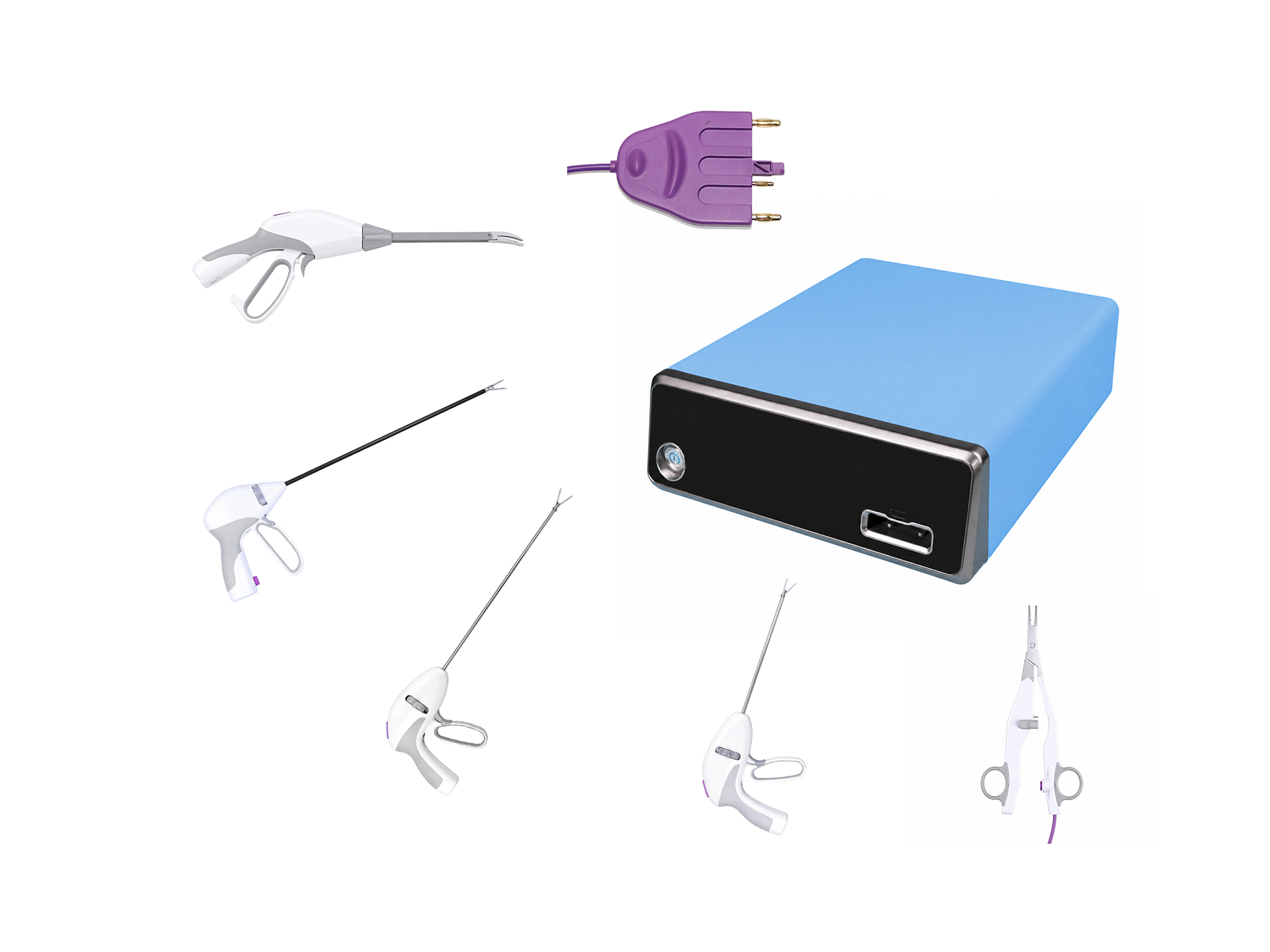
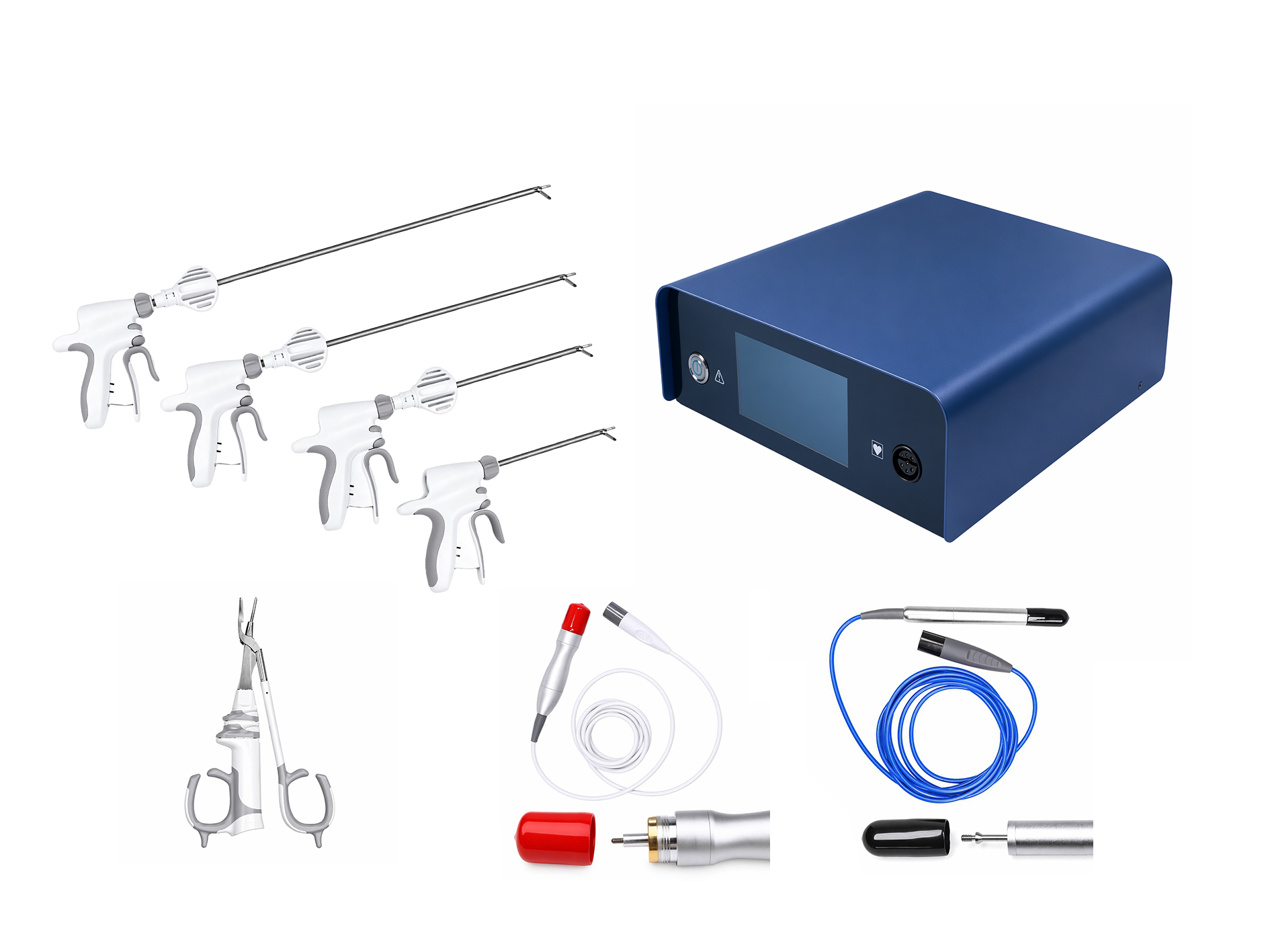
This document goes beyond the catalog to provide a thorough technical description of the device: design principles, materials of construction, component specifications, operating principles, and any software or electronic systems embedded in the device. For a vessel sealer system, for example, the detailed description would cover the instrument jaw design, the electrical interface characteristics, the sealing mechanism (bipolar RF energy with pressure and temperature-controlled feedback), and the compatible generator models.
Tip: Include engineering diagrams, cross-sectional views, and material certifications. Regulators review this document to assess whether the device design is sound and whether the materials are appropriate for patient contact.
G. Essential Principles Checklist and Conformance Evidence
The Essential Principles Checklist maps each applicable safety and performance requirement (from standards such as IEC 60601-1 for electrical safety, IEC 60601-1-2 for EMC, ISO 10993 for biocompatibility, and others) to the specific test reports or documentation that demonstrate compliance. It is essentially a compliance matrix — a table where each row is a requirement and each column points to the evidence.
Why it matters: This is one of the most scrutinized documents in the dossier. An incomplete checklist — where requirements are listed but evidence is missing or references are wrong — is the single most common cause of deficiency letters. Every claim must be traceable to a specific, valid test report.
Group 2: Clinical and Biological Evaluation (Items H–J)
These documents provide the evidence that the device is biologically safe and clinically effective.
H. All Relevant Evidence of Compliance to Essential Requirements
While Item G provides the checklist mapping, Item H is the actual collection of evidence documents: test reports from accredited laboratories, risk analysis summaries, and any other documentation that directly supports compliance claims. This includes electrical safety test reports, EMC test reports, performance test data, and software validation records.
I. Clinical Evaluation Report (CER) and Copies of Referenced Articles
The Clinical Evaluation Report is often the most time-consuming document to prepare. It synthesizes all available clinical data — published literature, clinical investigations, and equivalence data — to demonstrate that the device achieves its intended clinical performance and that its benefit-risk profile is acceptable.
How to prepare: Follow MEDDEV 2.7/1 Rev. 4 methodology (for MDD) or MDR Article 61 requirements. The CER must include a systematic literature search protocol, a critical appraisal of each referenced study, an equivalence justification if claiming equivalence to a predicate device, and a clear conclusion on safety and performance. Provide full copies of all referenced clinical articles — not just citations.
Common mistake: Submitting a CER that relies entirely on equivalence to a competitor’s device without adequate technical and biological equivalence data. Regulators increasingly require direct clinical data for the specific device being registered.
J. Complete Biological Evaluation Reports Including All Biocompatibility Testing Data
Biological evaluation follows ISO 10993 standards and must cover all endpoints relevant to the device’s tissue contact duration and type. For a patient-contacting surgical instrument, the minimum testing battery typically includes cytotoxicity (ISO 10993-5), sensitization (ISO 10993-10), and irritation/intracutaneous reactivity (ISO 10993-23). For devices with prolonged or permanent contact, additional endpoints such as implantation, genotoxicity, and systemic toxicity may be required.
Key requirement: All biocompatibility tests must be performed on the finished device or representative samples that include all patient-contacting materials. Testing raw materials alone is insufficient unless a justified extractables study bridges the gap.
Group 3: Post-Market Surveillance (Items K–L)
Regulators increasingly demand evidence that the manufacturer has systems in place to monitor device performance after it reaches the market.
K. Post-Market Surveillance (PMS) Plan and Report
The PMS Plan describes how the manufacturer will proactively collect and evaluate data on device safety and performance throughout its market lifetime. It must define data collection methods (literature review, user feedback, complaint analysis, registry data), evaluation criteria, and the process for triggering corrective actions. The PMS Report demonstrates what has already been collected and analyzed.
Practical tip: Even if the device is new to a specific market, provide a PMS plan from day one of expected market entry. Some regulators will not approve a submission without a documented PMS framework.
L. Post-Market Clinical Follow-up (PMCF) Plan and Report + Risk Management File
The PMCF is the clinical component of post-market surveillance. It defines how the manufacturer will continue to generate or collect clinical data after market entry to confirm the ongoing safety and performance of the device. The PMCF plan must specify study objectives, methodology, sample sizes, endpoints, and timelines.
The Risk Management File (per ISO 14971) is included alongside the PMCF documents because post-market clinical data feeds directly into the risk-benefit analysis. The risk management file must include the risk management plan, risk analysis (FMEA or equivalent), risk evaluation records, and the benefit-risk analysis conclusions.
Group 4: Risk Classification and Analysis (Items M, S)
M. Risk Classification Criteria, Rule, and Rationale (in Accordance with Directive 93/42/EEC or Applicable Regulation)
This document justifies the device’s classification class (I, IIa, IIb, or III under the EU system, or the equivalent classification in other frameworks). It must cite the specific classification rule applied, explain how the device’s intended use, invasiveness, duration of contact, and anatomical location map to that rule, and provide the rationale for the conclusion.
Why it matters: Classification determines the conformity assessment route, the level of Notified Body involvement required, and the scope of clinical evidence needed. An incorrect classification will invalidate the entire submission.
S. Benefit-Risk Analysis and Risk Management
This is the culminating document that ties together all risk management activities (from the risk management file), clinical evidence (from the CER), and performance data to demonstrate that the device’s benefits outweigh its residual risks when used as intended. It must follow the structured methodology of ISO 14971 and reference specific data from the supporting documents.
Group 5: Certificates and Quality System (Items N, O, P)
N. Shelf Life Test Report
The shelf life test report provides evidence that the device maintains its specified performance and sterility (if applicable) throughout its stated shelf life. This typically includes accelerated aging studies (per ASTM F1980 or equivalent) and/or real-time aging data, along with packaging integrity testing (seal strength, dye penetration, bubble emission) at the end of the claimed shelf life.
Common issue: Regulators reject submissions where the shelf life claim is not supported by any aging data, or where the test was performed on non-sterile samples that do not represent the final packaged device.
O. EC Certificate (If Available)
If the device holds a valid CE certificate from an EU Notified Body — whether under MDD or MDR — include it in the dossier. Many regulatory authorities outside the EU accept a CE certificate as evidence of conformity assessment and may streamline their own review process. If the device does not hold a CE certificate, this item is simply marked as not applicable, but be aware that some markets will then require additional evidence to compensate.
P. ISO 13485 Certificate
The ISO 13485 certificate is the foundation document of any medical device regulatory submission. It demonstrates that the manufacturer operates a certified quality management system specifically scoped for the design, manufacture, and distribution of medical devices. The certificate scope must explicitly cover the product category being registered and must be issued by an accredited certification body.
Critical detail: Verify that the certificate scope matches the actual products. An ISO 13485 certificate scoped for “surgical instruments” but not specifically mentioning the product category you are registering (e.g., electrosurgical instruments, vessel sealing devices) may be rejected.
Group 6: Design and Manufacturing (Item R)
R. Design and Manufacturing Information Process
This document describes the complete design and manufacturing process: from design input requirements through design verification and validation, design transfer to production, process validation, incoming inspection, in-process controls, and final release testing. It is essentially a narrative of the device design history file (DHIF) and manufacturing process flow.
How to prepare: Include a process flow diagram, identify critical process parameters and their validation status, describe the production environment (cleanroom class if applicable), and summarize the design history — key design changes, rationale, and verification outcomes. For power generator platforms, this includes documentation of the energy delivery algorithm, electrical safety design features, and software development lifecycle records.
Critical Subcontractor Requirements
If the device relies on a critical subcontractor — a supplier that performs a key manufacturing process, provides a critical component, or delivers a service (such as sterilization) that directly affects device safety or performance — the regulatory submission must include the same set of documentation (A through S) for that subcontractor’s scope of work.
This requirement reflects a fundamental regulatory principle: the manufacturer cannot delegate its regulatory responsibility. The brand holder is accountable for the entire supply chain. In practice, this means that if your sterilization subcontractor changes its process, your registration file must be updated to reflect the new validation data. If a critical electronic component comes from an upstream supplier, that supplier’s quality certifications and component specifications must be part of your dossier.
Practical approach: Maintain a register of all critical subcontractors, their current certifications, and the date of their most recent audit. Keep copies of their certificates and audit reports in your design history file so they are ready to include in any registration submission.
Common Mistakes and How to Avoid Them
After reviewing hundreds of registration dossiers across multiple markets, certain errors appear repeatedly:
- Inconsistent product descriptions: The product catalog lists one catalog number, the IFU references another, and the technical description uses a third naming convention. Regulators notice every discrepancy. Use a single, controlled naming convention across all documents.
- Expired or missing certificates: An ISO 13485 certificate that expired three months ago, or a CE certificate that has been withdrawn, will cause immediate rejection. Implement a certificate tracking system with renewal alerts.
- Shelf life claims without data: Claiming a three-year shelf life with no aging study data is a guaranteed deficiency. Plan shelf life studies early in the development process — accelerated aging data can be generated in weeks, but real-time data takes years.
- Clinical evaluation gaps: A CER that relies solely on equivalence to a competitor’s device without providing adequate technical and biological comparison data will be rejected in most markets. Invest in generating clinical data for the specific device.
- Incomplete biocompatibility testing: Testing only one endpoint (e.g., cytotoxicity) when the device contact type and duration require a full battery of tests. Map the biocompatibility testing plan to ISO 10993-1 Table A.1 before starting any tests.
- Missing risk management documentation: Providing a risk analysis without connecting it to the clinical evaluation, PMS plan, or benefit-risk analysis. The risk management file must be an integrated, cross-referenced system, not a standalone document.
- Wrong classification: Misclassifying the device (e.g., claiming Class I when the device’s intended use and invasiveness require Class IIa) will invalidate the entire submission and may require restarting the process with the correct classification.
How to Prepare a Complete Registration Dossier: Practical Steps
- Map the target market requirements early. Before writing a single document, identify the specific regulatory framework of the target market (SFDA, TFDA, MOH, EAEU, ANVISA, etc.) and obtain their official submission checklist. The 18-item framework described here is the universal baseline; individual markets may require additional items.
- Build a document master list. Create a tracking spreadsheet that maps each required document to its owner, current status, review date, and target completion date. Assign a regulatory affairs lead who owns the entire dossier.
- Standardize product naming. Establish a controlled vocabulary for the device: catalog numbers, model names, generic descriptions. Use this vocabulary consistently across every document in the dossier.
- Generate test data in parallel with development. Do not wait until the device is finalized to start biocompatibility testing, shelf life studies, or electrical safety testing. These activities should begin during the design validation phase.
- Invest in the CER. The clinical evaluation report is the document most likely to cause delays. Commission a systematic literature review early, engage a clinical affairs specialist, and ensure the CER follows the latest MEDDEV or MDR guidance.
- Audit your own dossier before submission. Conduct an internal review of the complete dossier against the submission checklist before sending it to the regulator. Use a cross-functional team (regulatory, quality, engineering, clinical) to verify consistency and completeness.
- Choose a manufacturing partner who supports registration. Your OEM/ODM partner should be able to provide all technical documents, test data, and certificates needed for your registration dossier. H Group Med provides full regulatory documentation support packages, including product technical files, biocompatibility test reports, clinical evaluation data, and ISO 13485 certificates scoped to your product category. Learn more about our vessel sealing platform in our vessel sealer buyer’s guide.
Understanding Medical Device Regulatory Requirements by Country
While the 18-item checklist above represents the universal core, each market has its own specific requirements and nuances:
- Middle East (Saudi SFDA, UAE MOH): Require an Arabic-language IFU and may require a free sale certificate from the country of origin. Saudi SFDA accepts CE marking as part of the conformity assessment pathway.
- Southeast Asia (Thai FDA, Philippines FDA, Indonesia BPOM): Typically require ASEAN Common Submission Dossier (CSDT) format. Local authorized representative or distributor appointment is mandatory.
- Russia and EAEU: Require EAEU registration under the Eurasian Economic Union framework, which includes its own conformity assessment procedures and Russian-language documentation.
- South America (Brazil ANVISA, Colombia INVIMA): ANVISA requires Portuguese-language documentation and may require local testing. INVIMA follows a risk-based classification system aligned with the GHTF model.
- Europe (EU MDR): The most demanding pathway, requiring a full technical documentation review by a Notified Body for Class IIa, IIb, and III devices. The documentation requirements under MDR are significantly more extensive than under the previous MDD.
Understanding how to register a medical device internationally requires both the universal documentation framework described here and the market-specific knowledge to adapt it for each target jurisdiction.
Get Expert Support for Your Registration and OEM/ODM Program
Preparing a complete medical device registration dossier is a complex, multi-disciplinary effort — but it does not have to be done alone. Contact H Group Med to discuss how we can support your registration program with comprehensive OEM/ODM manufacturing, full technical documentation packages, and regulatory affairs expertise for electrosurgical instruments and vessel sealing systems.
Our vertically integrated manufacturing model means we control the entire process — from design and development through production, testing, and packaging — and we provide the complete documentation trail that your regulatory submission requires. Whether you are registering a new product line or expanding into additional markets, our team has the experience and infrastructure to help you succeed.
H-group Original Article — Strictly reproduced with attribution. This article is for business and educational purposes; regulatory requirements vary by market and should be confirmed with local regulatory counsel. All referenced standards (ISO 13485, ISO 10993, ISO 14971, IEC 60601) are trademarks of their respective organizations.