Vessel Sealing System Buyer’s Guide: How Distributors Source LigaSure-Compatible Instruments from China
The vessel sealing consumables market is large, recurring, and dominated in installed base by Medtronic generators — which makes compatible instruments one of the best margin opportunities in surgical distribution. This guide explains how to source them from China without buying a liability.
Why the Compatible-Instrument Market Works
Every vessel sealing procedure consumes a disposable instrument while the generator — the expensive capital platform — sits on the cart for years. Hospitals worldwide own large installed fleets of Medtronic/Covidien generators (Valleylab™ LS10™, FT10™, Force Triad™). The sealing endpoint logic lives in that generator; the instrument’s job is to present stable, correctly engineered electrical and mechanical characteristics. A properly manufactured third-party instrument therefore runs the identical sealing cycle on the installed generator — at a fraction of the per-case consumable cost.
For a distributor, this is a rare combination: a recurring consumable revenue stream, an already-educated end user (surgeons know the product category), and no capital sale required. The challenge is supplier selection. Chinese manufacturers are not all the same — in fact, the gap between the top and bottom tiers is enormous.
The Three Tiers of Chinese Vessel Sealing Suppliers
Tier 1 — Traders and Rebranders
These companies sell instruments they do not make. They source from a small number of upstream factories, stamp a logo, and market internationally. They cannot answer technical questions about impedance algorithms, jaw pressure curves, or generator interfaces because they do not know them — and they cannot control lot-to-lot quality because they do not own the line. Price is attractive; technical support and regulatory traceability are not.
Tier 2 — Assemblers with Purchased Core Technology
These firms own assembly and packaging lines but source the core technology — often the generator platform or the electronic module — from a leading upstream manufacturer. Quality can be acceptable, but the “manufacturer” has no depth below assembly: when a compatibility issue or field complaint arises, they are debugging someone else’s design through a middleman.
Tier 3 — Vertically Integrated Manufacturers
These companies design and manufacture their own generators, control algorithms, instruments, molds, and electronics under one quality system. They hold their own patents, maintain design history files, and can produce burst-pressure and thermal-spread data from their own laboratory. They are the only tier that can legitimately support OEM branding, regulatory submissions in your market, and long-term product continuity. H Group Med operates at this tier, with granted national invention patents on the bipolar vessel sealing instrument, the electrosurgical tissue sealer jaw, and the multi-channel irrigation-suction handpiece.
What to Demand Before You Place a First Order
Treat every supplier claim as unverified until you see documents. A competent manufacturer will provide all of the following without hesitation:
| Requirement | What to Ask For | Why It Matters |
|---|---|---|
| Quality system | ISO 13485 certificate, scope covering the actual product factory | Without it, no serious regulatory submission and no consistent lot quality |
| CE marking | Declaration of Conformity and the Notified Body certificate under MDR (or valid MDD transition evidence) | Required for EU/EEA and accepted as baseline evidence in many other markets |
| Seal performance | Burst-pressure test report (mmHg) with sample size, vessel/tissue type, and test protocol | The single most direct measure of clinical safety; no data = no product |
| Thermal spread | Lateral thermal damage measurements in mm under defined activation conditions | Distinguishes true closed-loop sealers from repackaged bipolar |
| Biocompatibility | ISO 10993 test reports (cytotoxicity, sensitization, irritation at minimum) | Mandatory for patient-contacting devices |
| Sterilization | Sterilization validation report (EO or gamma) and packaging integrity data | A sterile-packed device with no validation is a regulatory time bomb |
| Compatibility matrix | Written list of validated generator models (LS10, FT10, Force Triad, etc.) and the electrical interface specification | “Compatible with LigaSure” as a slogan is worthless; validated model lists are not |
| Lot traceability | Sample lot records showing component batch traceability | Required for any recall handling and for distributor protection |
“Compatible” Claims vs. Validated Compatibility
Marketing pages will universally claim compatibility. The engineering reality is more specific: an instrument must present the correct electrical impedance profile, connector pinout, and handswitch signaling for the generator to recognize it and run its sealing algorithm. A poorly engineered compatible instrument can cause the generator to abort cycles, deliver incomplete seals, or — worst case — run without proper endpoint control.
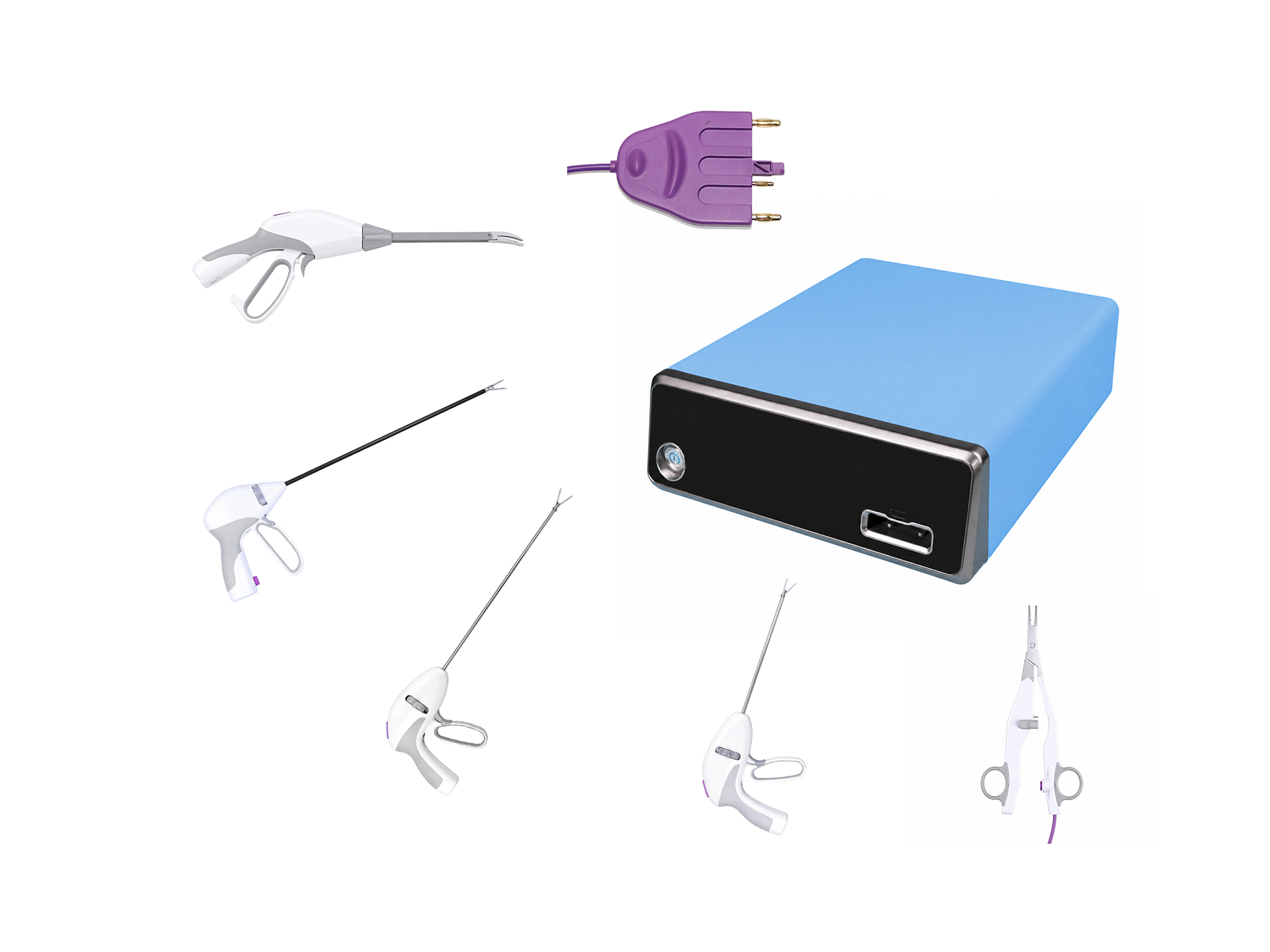
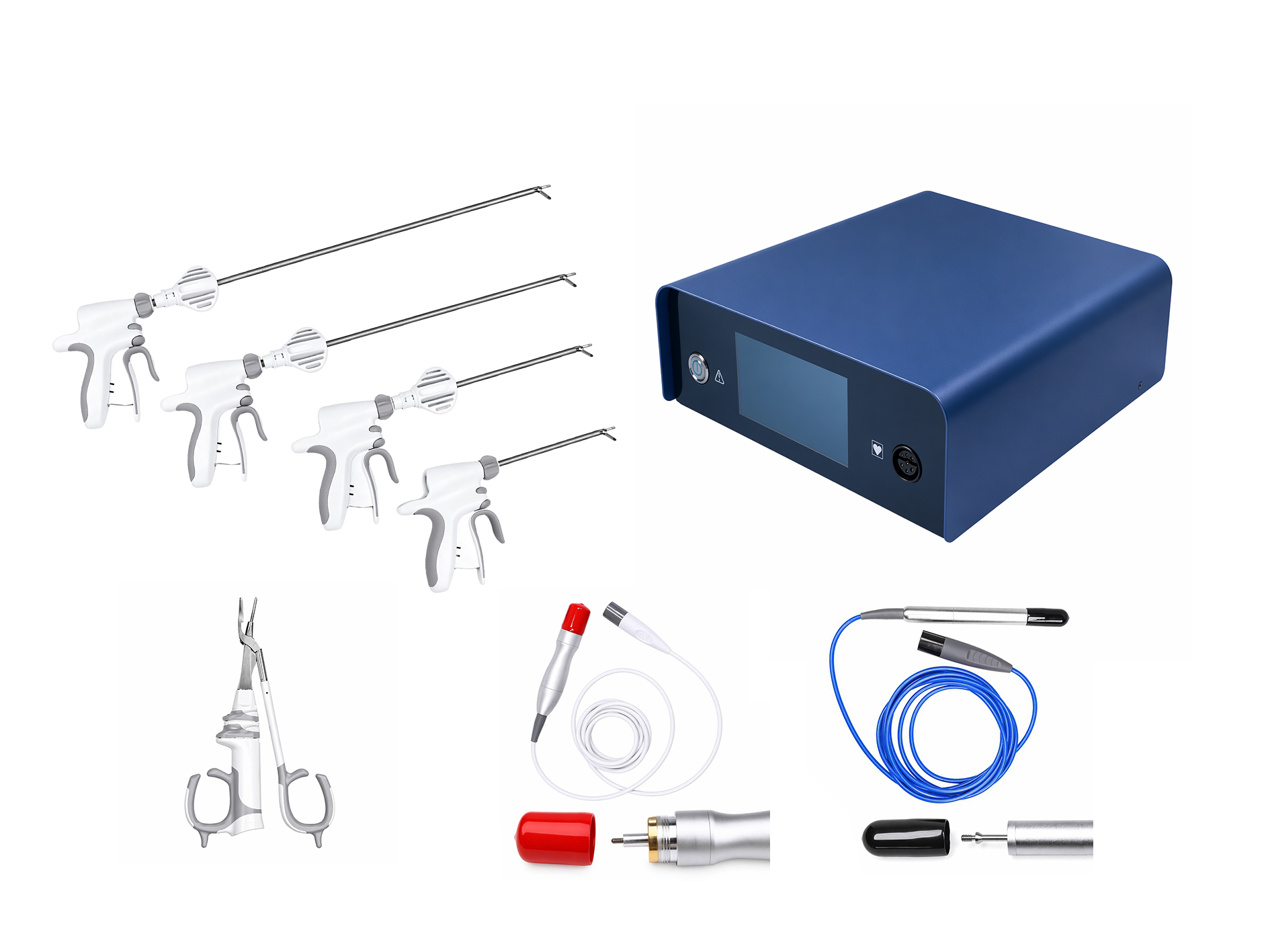
Ask the supplier three questions: (1) Which exact generator models and firmware versions have been tested? (2) What happens at the connector — is it a passive interface or does the instrument contain electronics? (3) Can they supply the test protocol or a field-return policy for aborted cycles? We walk through the technical background in our article on distinguishing Medtronic/Covidien generators and compatible devices, and our vessel sealer system ships with a documented compatibility matrix.
OEM/ODM and Commercial Terms to Negotiate
- Private labeling: confirm the supplier will print your brand on the instrument and sterile pouch — and whether mold or tooling changes are needed for your handle design.
- Jaw configurations: Maryland sealer, open forceps, laparoscopic long shaft, clip-applier style — verify which configurations are production items vs. custom development.
- MOQ structure: expect higher MOQs for custom branding and packaging; standard configurations should support trial orders small enough to run clinical evaluation.
- Regulatory support package: the supplier should provide the technical documentation needed for your local registration (SFDA in Saudi Arabia, TFDA in Thailand, and similar) — ask for the document list up front.
- Exclusivity: territorial exclusivity is negotiable at volume commitments; get it in the distribution agreement, not the sales email.
- Continuity: ask how design changes are communicated — a manufacturer that silently changes a component will eventually break your regulatory file.
Red Flags That Disqualify a Supplier
- No ISO 13485, or a certificate whose scope does not match the factory you visited.
- No burst-pressure data — or “data” that is a single page with no protocol, sample size, or laboratory identification.
- Claims that the instrument is “100% identical to LigaSure” — legally reckless and technically meaningless; the correct claim is validated compatibility.
- Priced 70–80% below every other quote with no explanation: you are buying a Tier 1 rebrand of unknown origin.
- No ability to name the generator’s control principle — if the sales contact cannot describe impedance sensing and endpoint detection, the company does not design what it sells.
- Refusal to allow a factory audit or video factory tour of the actual production and cleanroom areas.
The Evaluation Process We Recommend
- Shortlist by documentation — request the table above; eliminate anyone who cannot produce it within days.
- Audit the factory — on-site or by video; watch the assembly line, incoming inspection, and packaging/sterilization flow.
- Bench test — run samples on your customers’ actual generator models and confirm cycle completion, seal consistency, and blade function.
- Clinical trial placement — place trial units with one or two friendly surgeons; collect seal-failure and aborted-cycle counts, not just impressions.
- Regulatory filing — assemble the registration package for your market with the supplier’s technical documentation.
- Scale with exclusivity — convert volume into territorial protection and price stability.
Conclusion
Sourcing LigaSure-compatible vessel sealing instruments from China is a genuine, defensible business opportunity — the installed generator base guarantees demand, and consumable reorder cycles guarantee recurring revenue. The entire risk sits in supplier selection: traders sell price, while vertically integrated manufacturers sell the documentation, test data, and engineering support that protect your regulatory position and your hospital relationships.
H Group Med manufactures vessel sealing instruments, ultrasonic systems, and the multi-mode generators that drive them, under ISO 13485 with granted invention patents and full OEM/ODM support. Contact our team for the compatibility matrix, burst-pressure reports, and distributor terms — and if you are new to the technology, our primer on how vessel sealing works is the best place to start.
H-group Original Article — Strictly reproduced with attribution. LigaSure™, Valleylab™, LS10™, FT10™, and Force Triad™ are trademarks of Medtronic. This article is for business and educational purposes; regulatory requirements vary by market and should be confirmed with local counsel.