What Is a LigaSure Vessel Sealing System and How Does It Work?
A plain-language engineering guide to vessel sealing technology — how intelligent bipolar energy permanently fuses vessels up to 7 mm, how it differs from conventional electrosurgery and ultrasonic devices, and what buyers should evaluate in a manufacturer.
LigaSure™ is a registered trademark of Medtronic. It refers to a family of advanced bipolar vessel sealing devices; the underlying technology category is known as a vessel sealing system. This article explains the technology, not any single branded product.
What Is a Vessel Sealing System?
A vessel sealing system is an advanced bipolar electrosurgical device designed to permanently fuse the walls of blood vessels, lymphatics, and tissue bundles. Instead of simply cooking tissue the way a conventional bipolar forceps does, it combines precisely controlled radiofrequency energy with calibrated mechanical pressure to denature and reform the collagen and elastin inside a vessel wall, creating a single, continuous seal.
The result is not a clot and not a burn scar — it is a true fusion of the vessel walls that can withstand pressures well above normal systolic blood pressure. A complete system typically consists of three parts:
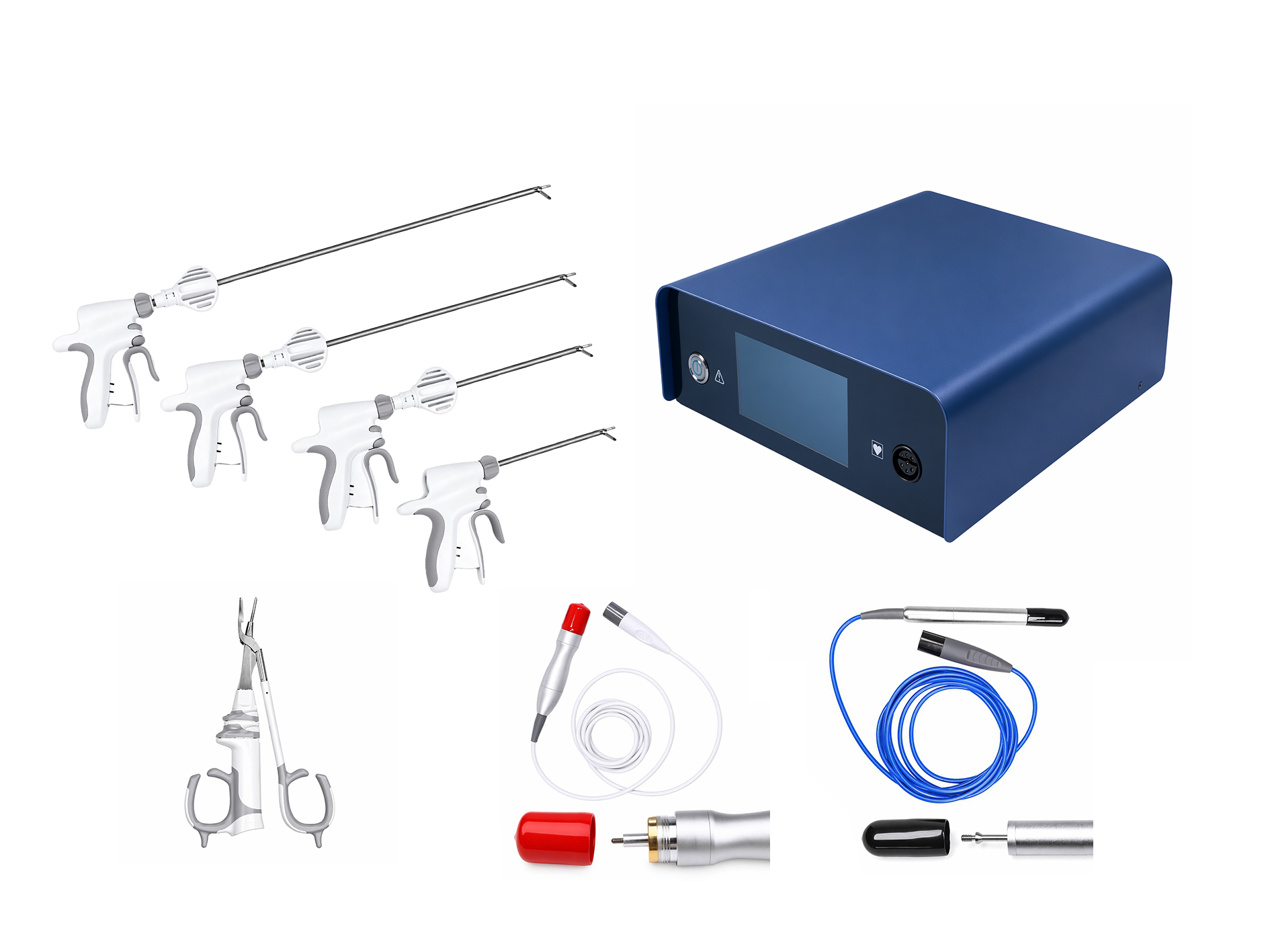
- An intelligent generator — the power source and the brain of the system, which measures tissue impedance and adjusts energy output in real time.
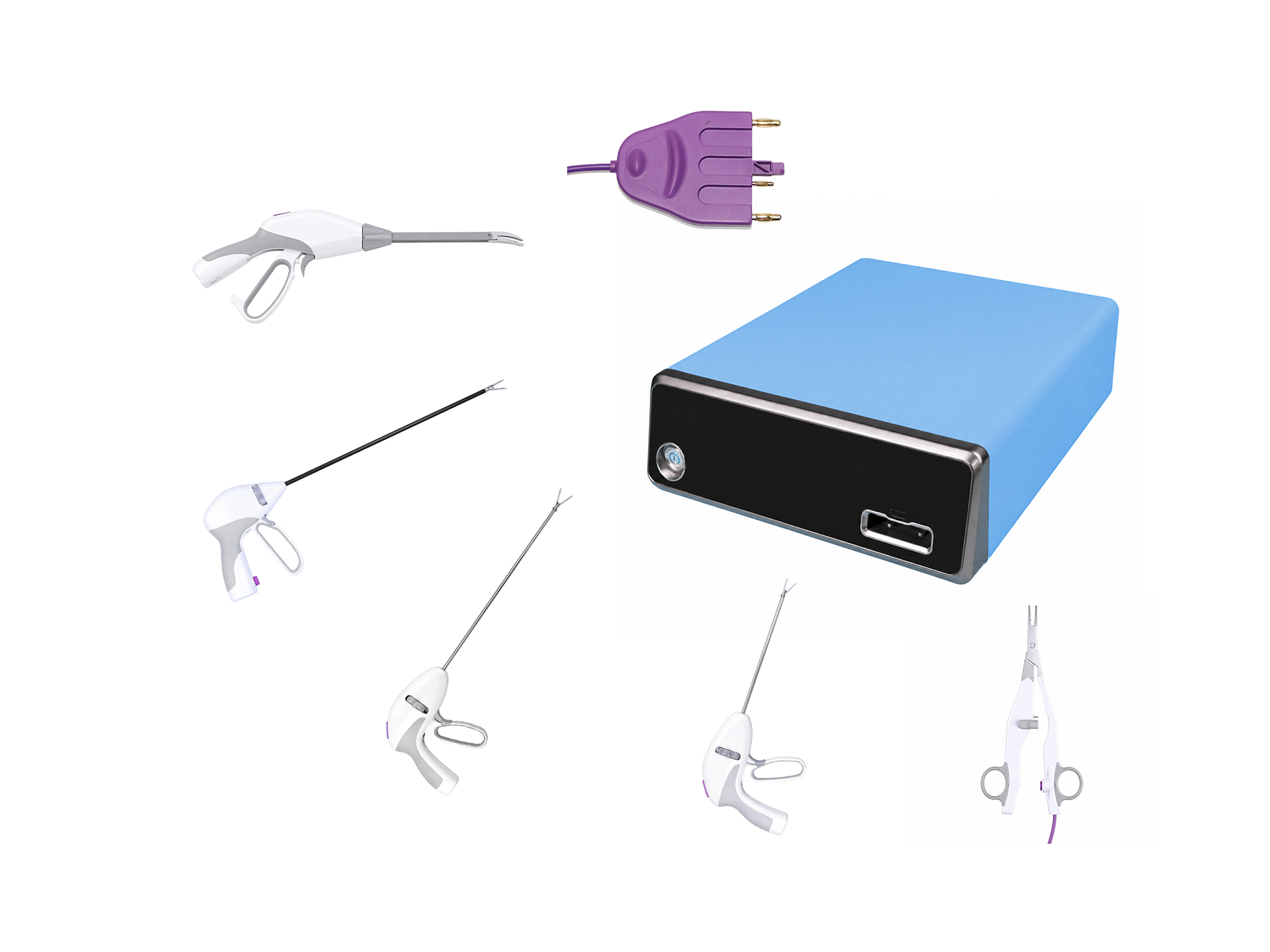
- Sealing instruments — reusable or disposable handpieces with opposing jaws and electrodes, available in open-surgery, laparoscopic, and Maryland-dissection configurations.
- An integrated cutting blade — most sealing instruments include a knife that divides the vessel in the middle of the seal line immediately after sealing, so no clips, sutures, or instrument changes are needed.
Because the category was pioneered and popularized by Medtronic’s LigaSure line (running on platforms such as the Valleylab™ LS10™, FT10™, and Force Triad™), surgeons commonly refer to the entire category as “LigaSure.” You can read our technical breakdown of those generator platforms here and here.
How It Works: The Four-Step Sealing Cycle
What separates a vessel sealer from ordinary bipolar is a closed-loop control cycle. The generator is not delivering a fixed amount of power for a fixed time — it is continuously reading the tissue and deciding when to stop. The cycle has four steps.
Step 1 — Tissue Compression
The surgeon places the vessel or tissue bundle between the instrument jaws and closes them. Consistent jaw pressure is critical: too little pressure leaves loose tissue with air gaps that cannot conduct energy evenly; too much pressure squeezes out the fluid needed to create the fusion. Good instruments use a ratchet or spring mechanism that holds jaw pressure inside a narrow engineered window for the full sealing cycle.
Step 2 — Tissue Sensing
Before and during activation, the generator sends a low-level sensing signal through the tissue and measures its electrical impedance. This reading is sampled hundreds to thousands of times per second. It tells the generator what kind of tissue it is dealing with, how thick it is, and how much moisture it contains — the same information an experienced surgeon used to judge by eye and by smell.
Step 3 — Controlled Energy Delivery
The generator delivers a high-current, relatively low-voltage bipolar waveform through the two jaw electrodes. As the tissue heats, water evaporates, collagen and elastin denature, and the opposing vessel walls fuse under jaw pressure. Because the generator watches the impedance curve — its absolute value, its slope, and its inflection points — it continuously modulates power to maintain an optimal temperature window, typically keeping lateral thermal spread to roughly 1–2 mm beyond the jaws.
Step 4 — Endpoint Detection and Division
When the impedance curve reaches the pattern that indicates complete, uniform fusion, the generator terminates energy automatically and signals the surgeon (usually an audible tone). The surgeon then advances the integrated blade, which divides the tissue through the center of the seal, leaving a sealed margin on both the retained and the specimen sides. Seal-and-cut happens in a single jaw placement.
This automated endpoint is the reason seal quality is far less operator-dependent than with conventional bipolar. We compared the two architectures in detail in “Large Vessel Sealing Device vs. Conventional Bipolar Electrosurgical Unit.”
What Size Vessels Can It Seal?
Modern vessel sealing systems are rated to reliably seal vessels up to 7 mm in diameter, including arteries, veins, lymphatics, and tissue bundles. Independent burst-pressure testing — the gold-standard measure of seal strength — typically shows completed seals withstanding three or more times normal systolic pressure, which is why major vascular structures in routine surgery can be managed without clips or ties.
Tissues routinely sealed include:
- Arteries and veins (including mesenteric, gastric, and ovarian pedicles)
- Lymphatic vessels and lymphatic bundles
- Connective tissue and peritoneal folds
- Broad ligaments and other vascularized tissue planes
Why Hospitals Moved Away from Clips, Ties, and Plain Bipolar
Vessel sealing became a standard of care over the past two decades because it changes the economics and safety of dissection:
- Reliable hemostasis with high burst pressure — fewer bleeding events and fewer costly conversions to open surgery.
- Fewer instrument exchanges — one jaw placement seals and divides, replacing forceps-plus-scissors-plus-clips sequences. Surgical time-and-motion studies consistently show shorter procedure times.
- Minimal thermal spread — the controlled waveform and jaw design limit lateral thermal damage to adjacent nerves, ureters, and bile ducts compared with conventional diathermy.
- No foreign material left behind — no clips or ligatures in the surgical field, which matters in infected fields and oncology.
- Repeatable results — the feedback loop compresses the skill gap between operators, an important advantage for training hospitals and high-volume centers.
LigaSure-Type Bipolar Sealing vs. Ultrasonic Scalpel: How to Choose
The other dominant energy technology in the modern OR is the ultrasonic scalpel (such as Ethicon Harmonic™), which uses a blade vibrating at 55.5 kHz to cut and coagulate by mechanical friction rather than electrical current. The two technologies overlap but are not interchangeable. Many hospitals standardize on both.
| Factor | Advanced Bipolar Sealing (LigaSure-type) | Ultrasonic Scalpel |
|---|---|---|
| Energy mechanism | Bipolar RF current through tissue | Mechanical vibration at ~55.5 kHz |
| Reliable sealing range | Up to 7 mm vessels | Typically up to 5 mm (larger models with caution) |
| Burst pressure on large vessels | Very high — strongest for 5–7 mm pedicles | Good, but generally lower on the largest vessels |
| Thermal spread | Low (~1–2 mm beyond jaw) | Very low; no electrical current through patient |
| Dissection finesse | Good; Maryland-jaw models dissect well | Excellent for fine, delicate dissection |
| Neuromonitoring / EMI | Electrical device — pause during nerve monitoring | No current — compatible with neuromonitoring |
| Best role | Sealing major vascular pedicles | Fine dissection, thyroid, and nerve-adjacent work |
In practice, surgeons often use an ultrasonic device for fine dissection along tissue planes and a bipolar sealer for the major vascular pedicles. We manufacture both platforms — see our ultrasonic scalpel system and our vessel sealer system — and explain how they fit a modern electrosurgical program in our article on large vessel sealing technology in modern surgery.
Where Vessel Sealing Is Used
The technology is now routine across specialties:
- General surgery — cholecystectomy, colectomy, appendectomy, hernia repair, splenectomy
- Gynecology — hysterectomy, myomectomy, oophorectomy, endometriosis excision
- Colorectal surgery — mesenteric vessel division, low anterior resection
- Urology — nephrectomy, radical prostatectomy, adrenalectomy
- Thoracic surgery — lobectomy and hilar vessel management
- Bariatric surgery — gastric bypass and sleeve gastrectomy
Compatibility and the Third-Party Instrument Market
Here is something procurement teams increasingly act on: the generator and the disposable instrument are separate products. The generator is the expensive, capital-equipment, regulated platform; the sealing instruments are the consumables used in every procedure. A well-engineered third-party instrument can connect to an installed Medtronic/Covidien generator and deliver the same sealing cycle, because the endpoint logic lives in the generator and the instrument’s job is to present stable, correctly engineered electrical and mechanical characteristics.
This is why a large and legitimate market of compatible instruments exists worldwide — hospitals keep their installed generators and cap their per-case consumable cost. We manufacture compatible sealing instruments under strict controls, and we have written about how to distinguish genuine generator compatibility from marketing claims. Our vessel sealer system is designed for simple, documented compatibility with Medtronic generators, and our 3-in-1 power generator is available for buyers who want a complete, single-vendor platform.
What to Ask a Vessel Sealing Manufacturer
Whether you are a hospital, a distributor, or an OEM brand, the physical look of an instrument tells you almost nothing. Ask for evidence on the points that actually determine clinical outcomes:
- Burst-pressure test data — sealed-vessel burst pressure in mmHg, on real tissue or validated simulations, with sample sizes.
- Thermal-spread measurements — lateral thermal damage in millimeters under defined activation conditions.
- Quality system — ISO 13485 certification and CE marking, with biocompatibility (ISO 10993) and sterilization validation files available.
- Generator compatibility documentation — which generator models the instrument is validated with, and what happens at the electrical interface.
- Vertical integration — whether the manufacturer designs its own generators and control algorithms or simply resells rebranded instruments. We discussed why this distinction matters in “Five Critical Factors That Define the Quality of Advanced Bipolar Vessel Sealers.”
- OEM/ODM capability — customization of jaw configuration, length, packaging, and branding for distributor markets.
Conclusion
A LigaSure-type vessel sealing system is an intelligent, closed-loop bipolar device: it compresses tissue, reads its impedance thousands of times per second, modulates a high-current waveform to fuse collagen and elastin, detects the endpoint automatically, and divides the vessel with an integrated blade — reliably sealing structures up to 7 mm with minimal thermal spread. That combination of strength, speed, and consistency is why it displaced clips, ties, and plain bipolar in operating rooms worldwide.
For hospitals and distributors, the strategic question is no longer whether to use vessel sealing — it is which supplier can demonstrate the burst-pressure data, the quality certifications, and the generator-level engineering to back the instrument. If you are evaluating a vessel sealing partner for procurement or OEM distribution, contact our team for technical data sheets and compatibility documentation.
H-group Original Article — Strictly reproduced with attribution. LigaSure™, Valleylab™, LS10™, FT10™, and Force Triad™ are trademarks of Medtronic. Harmonic™ is a trademark of Ethicon. This article is for educational purposes and does not constitute medical advice.