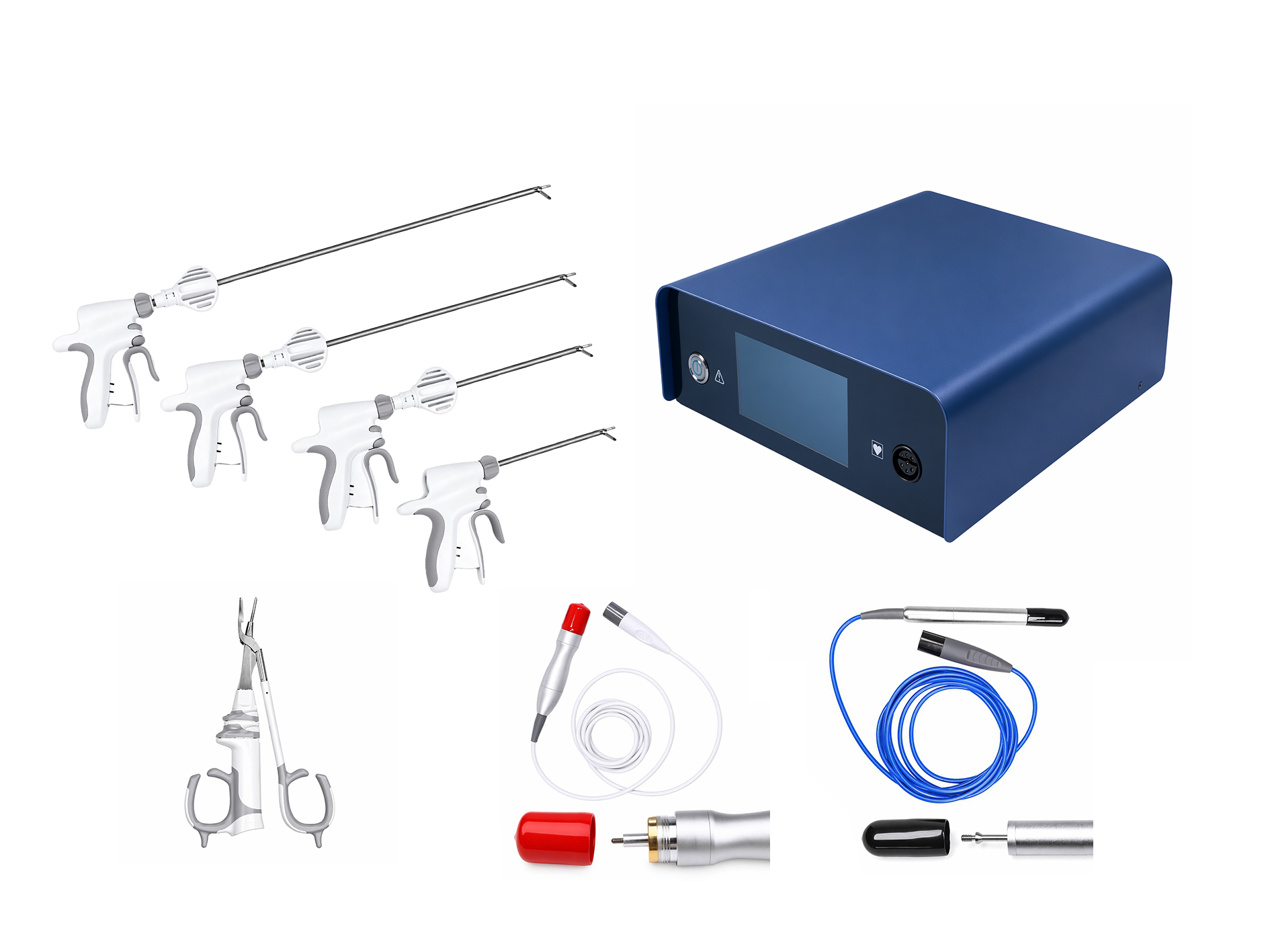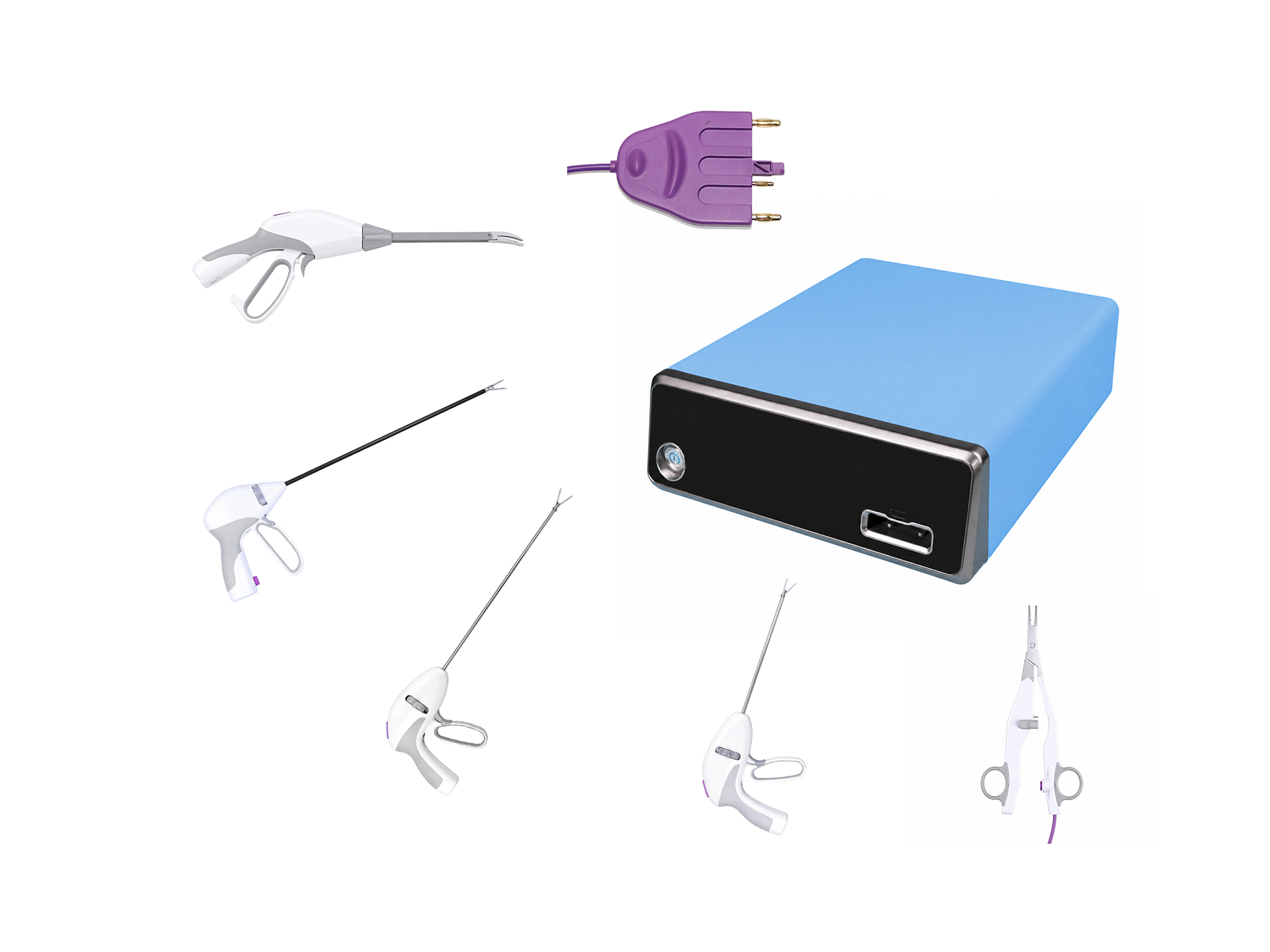
Large Vessel Sealing Device vs. Conventional Bipolar Electrosurgical Unit — What Really Sets Them Apart
A technical deep-dive into why vessel sealing systems are fundamentally different from ordinary bipolar units — and why generator intelligence is the real differentiator.
It Is Still Bipolar — But Everything Else Is Different
A vessel sealing system is, at its electrical core, a high-frequency bipolar surgical instrument. It uses the same fundamental principle as a conventional bipolar electrosurgical unit: current flows between two electrodes on the same jaw, generating thermal energy that denatures collagen and elastin in the vessel wall.
That is where the similarity ends.
A conventional bipolar forceps is essentially a “dumb” energy source. The surgeon clamps the tissue, activates the footswitch, and controls the duration of energy delivery based on visual judgment — the color change of the tissue, the amount of charring, the tactile feel of the jaw. The generator outputs a fixed or manually adjustable power level. There is no real-time feedback loop. The outcome depends almost entirely on the operator’s experience and judgment.
A large vessel sealing device adds two critical systems that a conventional bipolar unit completely lacks:
- An intelligent tissue-impedance sensing system — the generator continuously monitors the electrical impedance of the tissue in real time and adjusts power output algorithmically.
- An integrated mechanical cutting system — once the vessel is sealed, a built-in blade cuts the sealed tissue between the jaws, eliminating the need to switch instruments.
These two additions transform the device from a manually controlled energy tool into an algorithmically controlled surgical system.
The Intelligence Layer: Why Impedance Sensing Changes Everything
How Conventional Bipolar Operates
In a standard bipolar electrosurgical unit, the generator delivers energy at a preset power level. The surgeon observes the tissue response — color change, smoke, tissue desiccation — and decides when to stop. This process introduces several variables:
- Operator dependency: Two surgeons operating on identical tissue may deliver vastly different amounts of energy, depending on their experience, visual acuity, and judgment.
- No standardized endpoint: There is no objective, measurable criterion for “adequate seal.” One surgeon may stop at partial desiccation; another may over-coagulate.
- Thermal spread risk: Excessive energy delivery causes lateral thermal damage to adjacent structures — nerves, bile ducts, ureters — increasing the risk of postoperative complications.
- Inconsistent seal strength: Under-sealed vessels may bleed postoperatively; over-sealed vessels may suffer from weakened tissue integrity at the seal site.
These are not theoretical concerns. Clinical studies have documented significant variability in seal quality and thermal spread when conventional bipolar instruments are used by operators of different skill levels.
How a Vessel Sealing Generator Operates
A modern vessel sealing generator does not rely on the surgeon’s visual assessment. Instead, it implements a closed-loop control algorithm:
Step 1 — Pre-activation tissue characterization: Once the jaw clamps the tissue, the generator sends a low-level sensing current and measures the baseline impedance. This provides an initial estimate of tissue type, thickness, and water content.
Step 2 — Algorithmic energy delivery: Based on the initial impedance reading, the generator selects an energy delivery profile from its internal library. Different vessel calibers, tissue densities, and hydration levels require different thermal profiles. The generator adapts in real time.
Step 3 — Continuous impedance monitoring: As energy is delivered, water evaporates from the tissue, and impedance rises. The generator monitors the impedance curve — not just the absolute value, but the rate of change, the slope, and inflection points.
Step 4 — Automated endpoint detection: When the impedance curve reaches a predetermined pattern (typically a sharp rise indicating complete desiccation and collagen denaturation), the generator automatically terminates energy delivery. This ensures a consistent, reproducible seal every time — regardless of operator experience.
This is fundamentally different from a fixed-timer or fixed-energy approach. The generator is “reading” the tissue in real time and making surgical decisions at millisecond intervals.
The Processor Is the Heart of the System
The ability to sense impedance, compute the appropriate response, and adjust output in real time requires significant computational capability. The generator’s processor and sensor module must:
- Sample impedance at high frequency — typically thousands of readings per second — to capture the rapid changes during tissue sealing.
- Compute analog-to-digital conversions with high resolution — a 12-bit ADC provides 4,096 discrete levels; a 16-bit ADC provides 65,536 levels. The resolution directly determines how finely the generator can distinguish between tissue states.
- Execute the control algorithm with minimal latency — the time between sensing a change in impedance and adjusting the power output must be short enough to prevent over-delivery or under-delivery of energy.
- Maintain accuracy across a wide impedance range — tissue impedance during sealing can vary from tens of ohms to several kilo-ohms. The sensing system must remain accurate across this entire range.
These requirements make the processor and sensor module the single most critical components of the vessel sealing system. They determine whether the generator can accurately reproduce the sophisticated sealing algorithms that differentiate a true large vessel sealing device from a modified bipolar unit.
In engineering terms: the mechanical jaw and electrode design determine the potential performance of the instrument, but the generator’s processing capability determines the actual performance. A perfectly designed jaw paired with an underpowered processor will produce inconsistent seals. A moderately designed jaw with an excellent generator can still achieve reliable, reproducible results.
The Cutting Integration: Completing the Surgical Workflow
Beyond the sealing intelligence, a large vessel sealing device integrates a cutting mechanism into the same jaw that performs the seal. After the generator detects a complete seal and terminates energy, the surgeon actuates the cutting mechanism — typically a rotating knob or a sliding trigger — which drives a blade through the sealed tissue between the jaws.
This integration delivers two practical advantages:
- Reduced instrument exchanges: The surgeon seals and cuts in a single instrument placement, eliminating the need to remove the forceps, introduce scissors or a scalpel, and re-position.
- Consistent seal margin: The blade path is engineered to cut at a fixed distance from the seal line, ensuring an adequate seal margin on the proximal side — something that cannot be guaranteed when a separate cutting instrument is used.
Conventional bipolar units have no cutting capability. The surgeon must switch to a separate instrument after each seal, adding time and introducing variability in the seal margin.
What the Market Tells Us
The clinical advantages of intelligent vessel sealing systems are reflected in their market adoption. Globally, vessel sealing systems from major manufacturers have achieved dominant positions in operating rooms across general surgery, gynecology, urology, and thoracic surgery. Robotic surgical platforms — such as the Ligain® robotic system from Hugoo Medical — have further integrated vessel sealing technology into next-generation surgical workflows, signaling the industry’s confidence in this direction.
These market outcomes are not accidental. They are the result of demonstrated clinical superiority: fewer bleeding complications, shorter operative times, reduced thermal injury, and more consistent outcomes across surgeons of varying experience levels.
The Chinese Manufacturing Landscape
China has become a significant source of vessel sealing devices in the global market. However, the manufacturing landscape reveals a wide technology gap.
While numerous Chinese companies market vessel sealing products, the majority source their core technology — particularly the generator platform — from a small number of leading manufacturers. Many of these companies function primarily as distributors or rebranders, with limited understanding of the generator’s control algorithms, impedance sensing architecture, or processor requirements.
This creates a paradox: the physical instrument (jaw, electrode, handle) can be reverse-engineered and replicated with conventional manufacturing capabilities. But the generator’s intelligence — the firmware, the impedance algorithm, the real-time control loop — cannot be copied through mechanical replication alone. It requires deep expertise in signal processing, embedded systems, and surgical electrophysiology.
The consequence is that many products marketed as “vessel sealing systems” in the Chinese market may deliver energy in a manner functionally similar to conventional bipolar — without the true closed-loop intelligence that defines a large vessel sealing device. The mechanical form is present; the computational core is absent.
Key Technical Indicators for Evaluating a Vessel Sealing Generator
For anyone evaluating vessel sealing technology — whether a surgeon, a procurement team, or a regulatory reviewer — the following technical indicators should be examined:
| Indicator | What It Reveals |
|---|---|
| ADC resolution (bits) | How finely the generator can distinguish tissue impedance changes |
| Sampling rate (Hz) | How frequently the generator monitors tissue state |
| Control loop latency (ms) | How quickly the generator responds to impedance changes |
| Impedance range (Ω) | The span of tissue states the generator can accurately measure |
| Algorithm transparency | Whether the manufacturer can explain its endpoint detection logic |
| Seal burst pressure (mmHg) | The mechanical strength of the completed seal — the ultimate clinical outcome metric |
A genuine large vessel sealing generator will score well across all six indicators. A device that is essentially a modified bipolar unit will typically fall short on ADC resolution, sampling rate, and algorithm transparency — even if it achieves acceptable burst pressure on standard test specimens.
Conclusion
The difference between a large vessel sealing device and a conventional bipolar electrosurgical unit is not incremental — it is categorical. One is an intelligent, algorithmically controlled surgical system that reads tissue in real time and adapts its output accordingly. The other is a manually controlled energy source that relies entirely on the operator’s judgment.
The mechanical components — jaw, electrode, cutting blade — are necessary but not sufficient. The true differentiator lies in the generator’s computational architecture: the processor speed, sensor resolution, control algorithm, and real-time feedback loop that transform raw electrical energy into a precise, reproducible, and safe surgical outcome.
As the vessel sealing market continues to grow and more manufacturers enter the space, the ability to distinguish genuine intelligent sealing technology from conventional bipolar in new packaging becomes increasingly important — for patient safety, for surgical outcomes, and for the integrity of the industry itself.
H-group Original Article — Strictly reproduced with attribution.