LigaSure vs Ultrasonic Scalpel: Which Energy Device Does Your Operating Room Need?
Two energy technologies dominate the modern operating room. This guide compares advanced bipolar vessel sealing (LigaSure-type) with ultrasonic shears (Harmonic-type) on the metrics that actually matter in surgery — and explains why most hospitals end up standardizing on both.
LigaSure™ and Force Triad™ are trademarks of Medtronic; Harmonic™ is a trademark of Ethicon. This article compares the two technology categories, not any single branded product.
The Two Energy Technologies in Every Modern OR
When a hospital equips a general surgery, gynecology, or urology room today, the energy-device decision usually comes down to two platforms: advanced bipolar vessel sealing — the category popularized by Medtronic’s LigaSure line — and ultrasonic shears — the category popularized by Ethicon’s Harmonic line. Both replaced clips, sutures, and plain diathermy for most dissection work. Both claim fast sealing, low thermal spread, and fewer instrument exchanges.
They are, however, fundamentally different machines. If you are new to how vessel sealing works, start with our primer “What Is a LigaSure Vessel Sealing System and How Does It Work?” Here we compare the two head to head.
How Each Technology Works
Advanced Bipolar Vessel Sealing
A vessel sealer sends a controlled, high-current bipolar radiofrequency waveform through tissue compressed between two jaw electrodes. The generator measures tissue impedance thousands of times per second, modulates energy to denature collagen and elastin, detects the seal endpoint automatically, and an integrated blade then divides the sealed tissue. It is an electrical device: current passes through the patient between the two jaws.
Ultrasonic Shears
An ultrasonic scalpel uses no electrical current through the patient at all. A generator drives a piezoelectric transducer, which vibrates a metal blade at approximately 55.5 kHz — 55,500 cycles per second. The blade clamps against a padded jaw arm, and friction between the vibrating blade and tissue generates heat that denatures protein, cuts tissue, and coagulates small vessels simultaneously. The heat is mechanical in origin, localized exactly at the blade-tissue interface.
Head-to-Head: The Seven Metrics That Matter
| Metric | Advanced Bipolar Sealing (LigaSure-type) | Ultrasonic Shears (Harmonic-type) |
|---|---|---|
| Reliable vessel range | Up to 7 mm | Up to 5 mm (larger pedicles require caution and longer activation) |
| Burst pressure on 5–7 mm vessels | Highest in independent testing; the gold standard for major pedicles | Good on small vessels; generally lower burst pressure on the largest pedicles |
| Lateral thermal spread | Low, ~1–2 mm beyond the jaw | Very low at minimum settings; can exceed bipolar at max power with prolonged activation |
| Cutting speed | Seal first, then blade division — deliberate two-step rhythm | Fast simultaneous cut-and-coagulate; quicker through thin tissue planes |
| Fine dissection | Capable, especially Maryland-jaw models, but bulkier tip | Excellent — curved, narrow blades dissect delicate planes precisely |
| Surgical smoke | Moderate smoke generation | Less smoke and less charring at equivalent settings |
| Neuromonitoring (EMG/nerve mapping) | Electrical current — must pause during nerve stimulation | No current — can remain in use during neuromonitoring |
Where Bipolar Vessel Sealing Wins
Bipolar sealing is the safer choice whenever the structure being divided is large, vascular, or unforgiving:
- Colorectal and gastric surgery — mesenteric pedicles, ileocolic vessels, short gastric vessels routinely reach 5–7 mm. A slipped seal here means a major bleed.
- Hysterectomy — the uterine and ovarian vascular pedicles are the classic LigaSure indication; burst-pressure reliability is the whole point.
- Splenectomy and nephrectomy — short, fat, high-flow hilar vessels.
- Bariatric surgery — thick omental and mesenteric tissue bundles.
The automated endpoint detection also matters in teaching hospitals: seal quality depends on the generator’s impedance algorithm, not on how long a resident holds the trigger.
Where Ultrasonic Shears Win
Ultrasonic devices dominate when the work is fine, close to nerves, or electrically sensitive:
- Thyroid and parathyroid surgery — dissection millimeters from the recurrent laryngeal nerve, often under continuous neuromonitoring. No electrical current means no interference with EMG tubes.
- Breast and axillary surgery — precise plane development with minimal char.
- Pediatric and neonatal surgery — tiny structures where low thermal spread and a fine tip matter most.
- Any procedure with nerve mapping — the device can stay active while stimulation probes run.
Surgeons also value the ultrasonic device’s single-motion cut-and-coagulate rhythm for long, thin tissue planes — taking down the omentum or developing the colon mesentery — where speed and a lack of smoke improve visibility.
Why Most Hospitals Standardize on Both — Not One or the Other
In real practice the two devices are complementary, not competing. A typical colorectal or gynecologic procedure uses the ultrasonic shears for fine dissection along avascular planes and the bipolar sealer for the named vascular pedicles. A thyroid case may be 90% ultrasonic; a colectomy may be 60% bipolar. Hospitals that try to standardize on a single technology universally usually reintroduce the other within a year — either because of a bleeding event on a large pedicle or because surgeons complain about clumsy fine dissection.
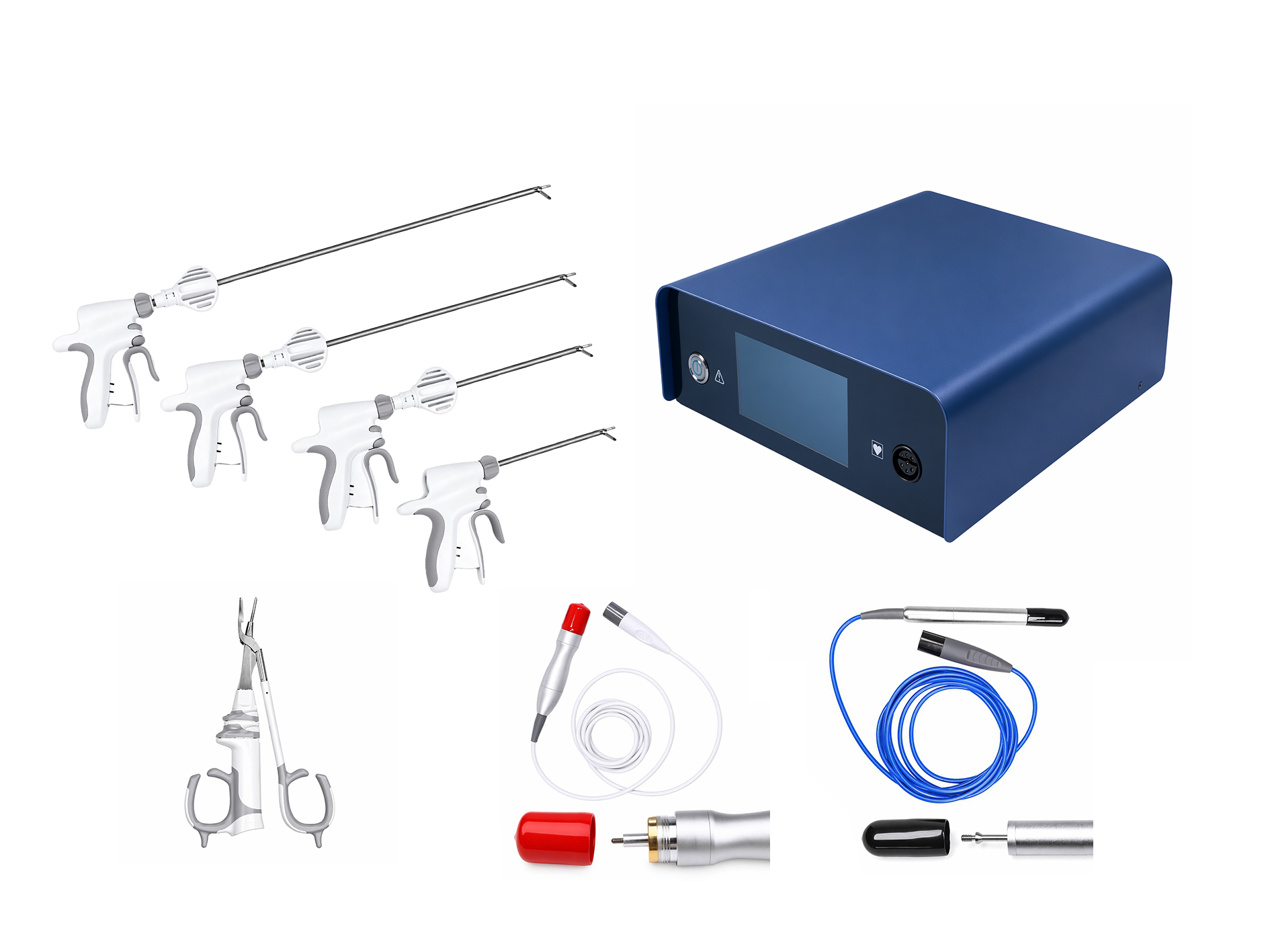
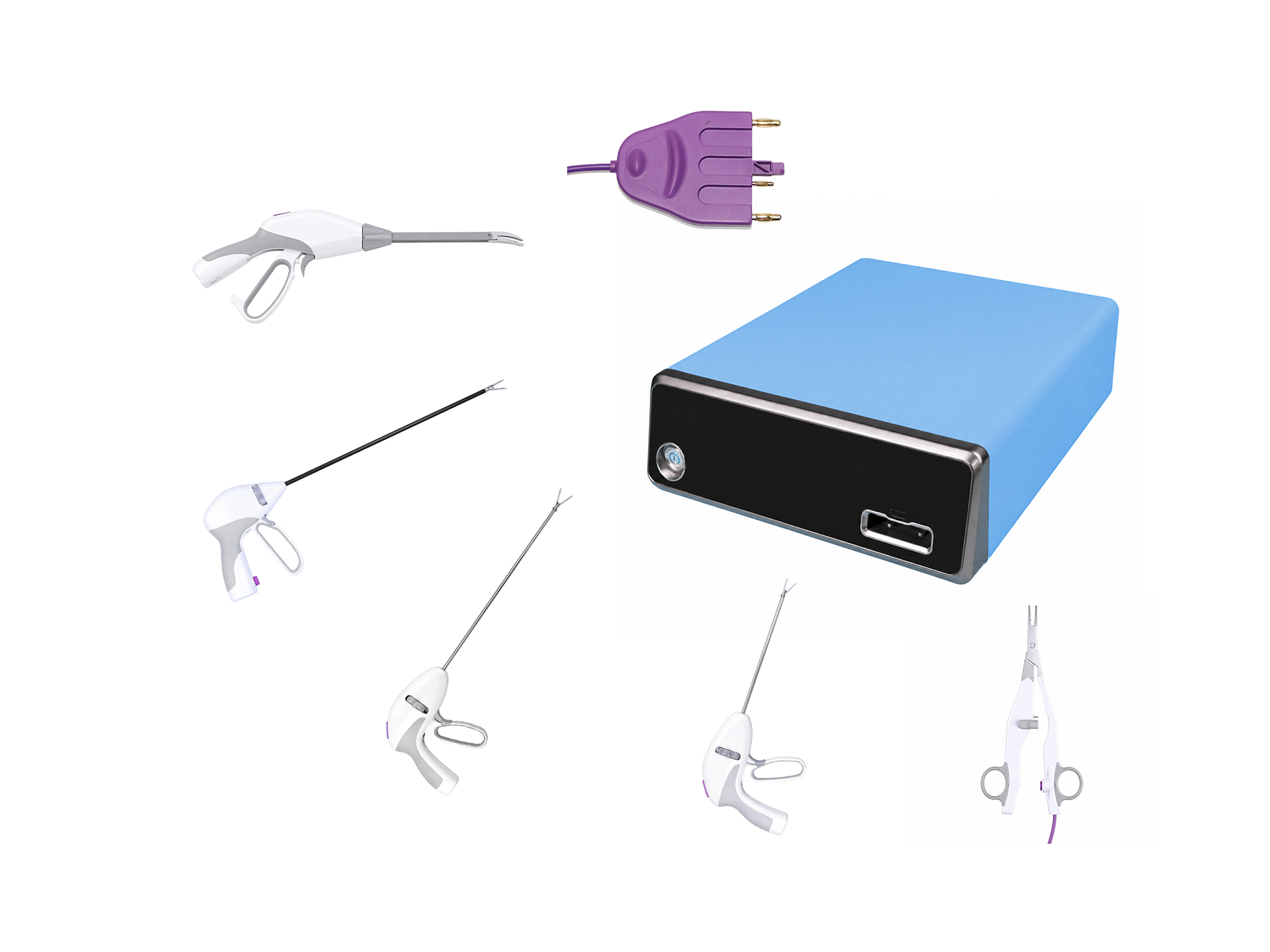
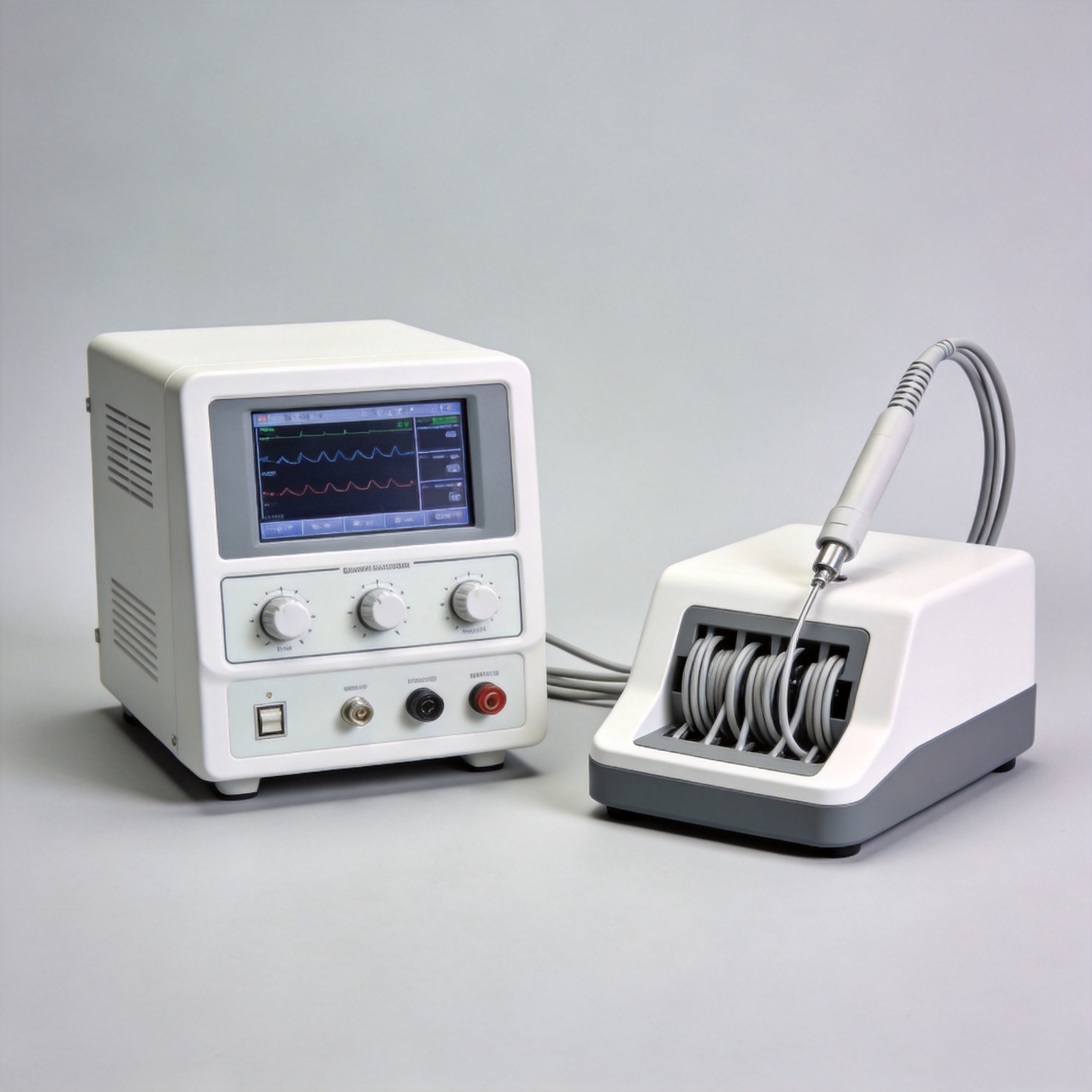
This is also why modern generators increasingly support both modalities. Our 3-in-1 power generator runs vessel sealing, ultrasonic, and monopolar/bipolar modes from a single platform — one capital purchase instead of two generator fleets, with one foot pedal and one user interface.
The Cost Question Nobody Likes to Discuss
The generator is capital equipment; the instruments are consumables — and the consumables are where the lifetime cost of an energy program actually lives. A high-volume surgical department may open hundreds of disposable sealing instruments and ultrasonic shears per month. At list price, branded consumables dominate the per-case cost.
A well-established way hospitals control that cost: keep the installed, validated generators — Medtronic/Covidien or Ethicon — and source compatible instruments from quality-managed third-party manufacturers. The sealing endpoint logic lives in the generator; a correctly engineered instrument presents the same electrical and mechanical interface and runs the same cycle. We manufacture both compatible vessel sealing instruments and ultrasonic scalpel systems under ISO 13485 controls, and we explain the compatibility architecture in our article on distinguishing genuine generator compatibility. For distributors, our buyer’s guide to sourcing vessel sealing instruments covers the full evaluation process.
Decision Checklist for Procurement and Surgical Leadership
- Case mix first: heavy colorectal/gynecology/bariatric volume → prioritize bipolar sealing. Heavy endocrine/breast/pediatric volume → prioritize ultrasonic.
- Neuromonitoring programs: thyroid/neuro-adjacent rooms need an ultrasonic option regardless of bipolar standardization.
- Training hospitals: automated endpoint sealing reduces operator-dependent variability — weight bipolar higher.
- Capital budget: a multi-mode generator (vessel sealing + ultrasonic + monopolar) can replace two single-technology platforms.
- Consumable budget: audit per-case instrument spend; compatible-instrument programs typically cut it by a large margin without touching the installed generators.
- Demand the data: burst-pressure reports, thermal-spread measurements, and ISO 13485 certification from any instrument supplier — branded or compatible.
Conclusion
LigaSure-type bipolar sealing and Harmonic-type ultrasonic shears are not rivals so much as specialists: the bipolar sealer is the strongest, most reliable tool for vascular pedicles up to 7 mm, while the ultrasonic device is the finer, cooler, electrically silent tool for delicate and nerve-adjacent dissection. Hospitals with mixed case volume standardize on both, and increasingly on multi-mode generators that run both from one platform.
If you are equipping an operating room or evaluating a compatible-instrument program, contact our team for burst-pressure data, generator compatibility matrices, and OEM pricing for both energy platforms.
H-group Original Article — Strictly reproduced with attribution. LigaSure™ and Force Triad™ are trademarks of Medtronic; Harmonic™ is a trademark of Ethicon. This article is for educational purposes and does not constitute medical advice.