How Different Energy Generator Platforms Affect Vessel Sealing Performance
The energy generator is not just a power supply — it is the brain of the sealing algorithm. The same instrument plugged into a different generator can produce dramatically different burst pressures, thermal spread, and seal consistency. This article explains why — and what it means for your operating room.
LigaSure™, Valleylab™, and Force Triad™ are trademarks of Medtronic; Harmonic™ is a trademark of Ethicon; THUNDERBEAT™ is a trademark of Olympus. This article is for educational purposes and does not constitute medical advice. H Group Med is not affiliated with any of these companies.
Introduction: The Generator Is the Algorithm, Not Just the Battery
When surgeons think about vessel sealing performance, they tend to focus on the instrument — jaw design, blade quality, insulation. But the instrument is only half the system. The energy generator controls every critical parameter of the sealing cycle: how much energy is delivered, when it stops, how it responds to changing tissue impedance, and what constitutes a “complete seal.”
Put simply: the same vessel sealer instrument, connected to two different generators, can produce seals with meaningfully different burst pressures and thermal spread profiles. The generator’s firmware determines the sealing algorithm — and the sealing algorithm determines patient safety.
If you are new to how vessel sealing works at a fundamental level, our primer on what a LigaSure-type vessel sealing system is and how it works provides the foundation. This article builds on that by examining how the choice of generator platform changes the outcome.
Three Energy Types: Bipolar RF, Ultrasonic, and Hybrid
1. Bipolar Radiofrequency (Advanced Bipolar Sealing)
The dominant platform for large-vessel sealing is advanced bipolar radiofrequency energy, popularized by Medtronic’s LigaSure line. Generators in this category include the Valleylab LS10, the Valleylab FT10, and the Force Triad system.
These generators deliver a high-current, low-voltage bipolar RF waveform through tissue compressed between two jaw electrodes. The key differentiator is closed-loop impedance feedback: the generator samples tissue impedance thousands of times per second, modulates energy output in real time, and terminates the cycle when impedance rises sharply — indicating that collagen and elastin have been fully denatured and the vessel is sealed. This impedance-spike endpoint detection is the cornerstone of consistent seal quality. For a deeper dive into how genuine compatibility works with these platforms, see our guide to distinguishing Medtronic/Covidien generators and compatible devices.
2. Ultrasonic Energy
Ultrasonic platforms — typified by Ethicon’s Harmonic series — use no electrical current through the patient. A piezoelectric transducer vibrates a metal blade at approximately 55.5 kHz. The mechanical friction between the vibrating blade and the clamp arm denatures protein, cuts tissue, and coagulates small vessels simultaneously. The generator controls vibration amplitude (blade excursion), activation duration, and tissue-load response.
Ultrasonic generators do not measure impedance in the same way — they monitor resonant frequency shifts and tissue load on the transducer to adjust output. The sealing endpoint is typically determined by a combination of activation time and visual assessment, making it somewhat more operator-dependent than bipolar impedance-based systems. For a detailed technology comparison, see our LigaSure vs ultrasonic scalpel guide.
3. Hybrid Energy (Bipolar + Ultrasonic)
Olympus’ THUNDERBEAT platform combines both modalities in a single instrument and generator. The sealing cycle begins with bipolar RF pre-coagulation to close the vessel lumen, followed immediately by ultrasonic division. The generator runs two distinct energy algorithms in sequence within a single activation. This hybrid approach aims to offer the seal reliability of bipolar RF on large vessels with the cutting speed of ultrasonic energy.
How Generator Algorithms Shape Seal Quality
Not all generators control energy delivery the same way. Four algorithm-level factors directly affect the quality of the resulting seal:
Temperature Control Accuracy
In advanced bipolar systems, the generator’s ability to modulate energy based on real-time tissue impedance determines how precisely temperature is managed within the jaw. A closed-loop system like the LS10 or FT10 continuously adjusts power to keep tissue heating within the optimal denaturation window — typically 75–100°C at the seal interface. Generators that rely on open-loop timed output (fixed duration, fixed power) cannot respond to variations in tissue thickness, hydration, or initial temperature, leading to under-sealing in thick tissue or overheating in thin tissue.
This distinction is why the five critical factors defining high-quality bipolar vessel sealers always include generator intelligence as a top-tier criterion.
Jaw Pressure – Energy Synergy
The mechanical jaw pressure and the electrical energy profile must work together. Different generators assume different jaw geometries and contact areas when calculating their energy algorithms. A generator calibrated for a specific electrode surface area and compression ratio will deliver a different waveform than one calibrated for a different geometry — even if the instrument physically connects and activates.
This is why using a cable adapter kit to connect instruments to a generator requires more than verifying that the device powers on. You must verify that the seal quality meets burst-pressure specifications on the specific generator platform you are using. Electrical interface compatibility does not guarantee algorithmic compatibility.
Activation Profile: Pulsed vs. Continuous
Some generators deliver energy in pulsed mode — short bursts separated by brief cooling intervals — while others use continuous output. Pulsed activation allows heat to dissipate slightly between pulses, which can reduce lateral thermal spread and produce more uniform protein denaturation across the jaw. Continuous output may seal faster but risks charring at the electrode-tissue interface, which increases the chance of tissue sticking and incomplete seals.
The activation profile is entirely controlled by the generator firmware — the instrument has no influence over it.
Endpoint Detection: Impedance Spike vs. Temperature Threshold vs. Fixed Time
How does the generator know when the seal is complete? Three approaches exist:
- Impedance spike detection (used by LigaSure-type platforms): The generator monitors tissue impedance and terminates the cycle when impedance rises above a threshold, indicating complete protein denaturation. This is the most widely validated method for producing consistent burst pressures.
- Temperature threshold: Some generators use an integrated thermistor to terminate when a target temperature is reached. This works but can be slower to respond than impedance feedback and is sensitive to sensor placement.
- Fixed time: The simplest approach — the generator delivers energy for a preset duration regardless of tissue state. This is the least reliable for consistent seal quality, as it cannot compensate for tissue variability.
Core Sealing Performance Metrics Across Platforms
When evaluating how generator platforms affect outcomes, four metrics matter most:
| Metric | Bipolar RF (LigaSure-type) | Ultrasonic (Harmonic-type) | Hybrid (THUNDERBEAT-type) |
|---|---|---|---|
| Burst pressure (mmHg) | Highest on 5–7 mm vessels; consistently >3× normal arterial pressure in published studies | Good on ≤3 mm vessels; lower and more variable on 5–7 mm pedicles | Comparable to bipolar RF on large vessels (bipolar pre-seal phase) |
| Thermal spread (mm) | ~1–2 mm beyond jaw edge with impedance-controlled algorithms | Very low at minimum amplitude; increases with prolonged high-power activation | Bipolar phase similar to LigaSure; ultrasonic division adds minimal additional spread |
| Seal consistency (CV) | Low coefficient of variation — automated impedance endpoint reduces operator dependency | Higher variability — endpoint partly operator-determined (visual/tactile) | Moderate — bipolar phase is automated, but sequence timing adds a variable |
| Vessel size range | Validated up to 7 mm diameter | Validated up to 5 mm (some models rated to 7 mm with extended activation) | Up to 7 mm (per IFU on current-generation models) |
The data consistently shows that bipolar RF platforms with closed-loop impedance feedback produce the highest and most consistent burst pressures on large vessels. Ultrasonic platforms trade some burst pressure for precision and zero electrical current. Hybrid platforms attempt to capture both advantages but add system complexity.
Practical Impact on the Operating Room
The Same Instrument on Different Generators
Consider a scenario that is increasingly common in multi-vendor hospital environments: a vessel sealing instrument is connected to a generator it was not originally designed for — perhaps through a third-party adapter cable, or because the OR has standardized on a different generator platform. The instrument physically activates. The jaw closes. Energy is delivered. But the seal quality may be significantly different from what was validated.
Why? Because the generator’s impedance model, its energy modulation curve, its endpoint detection threshold, and its expected load characteristics are all tuned for a specific instrument geometry. When the actual instrument presents a different electrode area, jaw spacing, or connector impedance, the algorithm compensates — but the compensation is not always optimal.
Compatibility Is Not Just “Can It Power On”
A cable adapter kit may allow an instrument to physically connect to a generator and receive energy. But compatibility involves multiple layers:
- Electrical interface: connector pinout, impedance at the connector, cable length and gauge.
- Impedance curve: does the instrument’tissue-electrode impedance profile match what the generator’s algorithm expects?
- Firmware version: generator software updates can change the sealing algorithm. A generator running older firmware may seal differently than one running the latest version — even with the same instrument.
- Mechanical interface: jaw pressure, electrode surface area, and insulation geometry must all fall within the range the algorithm was designed for.
This is exactly why our compatibility guide emphasizes that the correct validation process involves measuring burst pressure and thermal spread on the target generator — not simply confirming that the instrument activates.
Procurement Advice: What to Ask Before You Buy
If you are a distributor, hospital procurement officer, or surgical supply chain manager evaluating compatible vessel sealing instruments, here is what you should require from any supplier — including us:
- Burst pressure data on your specific generator. Not on “a compatible generator” — on the exact model and firmware version you plan to use. If a supplier cannot provide this data, they have not validated the combination.
- A clear compatibility validation protocol. The supplier should test instruments on each target generator platform, document seal integrity at specified burst pressures (typically ≥3× normal arterial pressure for the rated vessel size), and make the data available.
- Thermal spread measurements. Ask for histological or infrared thermography data showing lateral thermal damage at the seal edge.
- ISO 13485 certification. The instrument must be manufactured under a certified quality management system. This is non-negotiable for any regulated market.
- Firmware compatibility matrix. A documented list of which generator models and firmware versions have been tested and validated.
Do not choose on price alone. Seal reliability is patient safety. A marginal saving on an instrument that produces inconsistent burst pressures on your generator platform is not a cost reduction — it is a liability.
Conclusion: The Generator Is the Brain, the Instrument Is the Hands
Energy generators in vessel sealing are not interchangeable black-box power supplies. They are sophisticated computing platforms that run proprietary algorithms to control the entire sealing process — from energy modulation to endpoint detection. The choice of generator platform fundamentally affects burst pressure, thermal spread, seal consistency, and the range of vessel sizes that can be safely sealed.
The same instrument on a different generator does not produce the same seal. This is not a theoretical concern — it is a measurable, clinically significant difference that should inform every compatibility decision in the operating room.
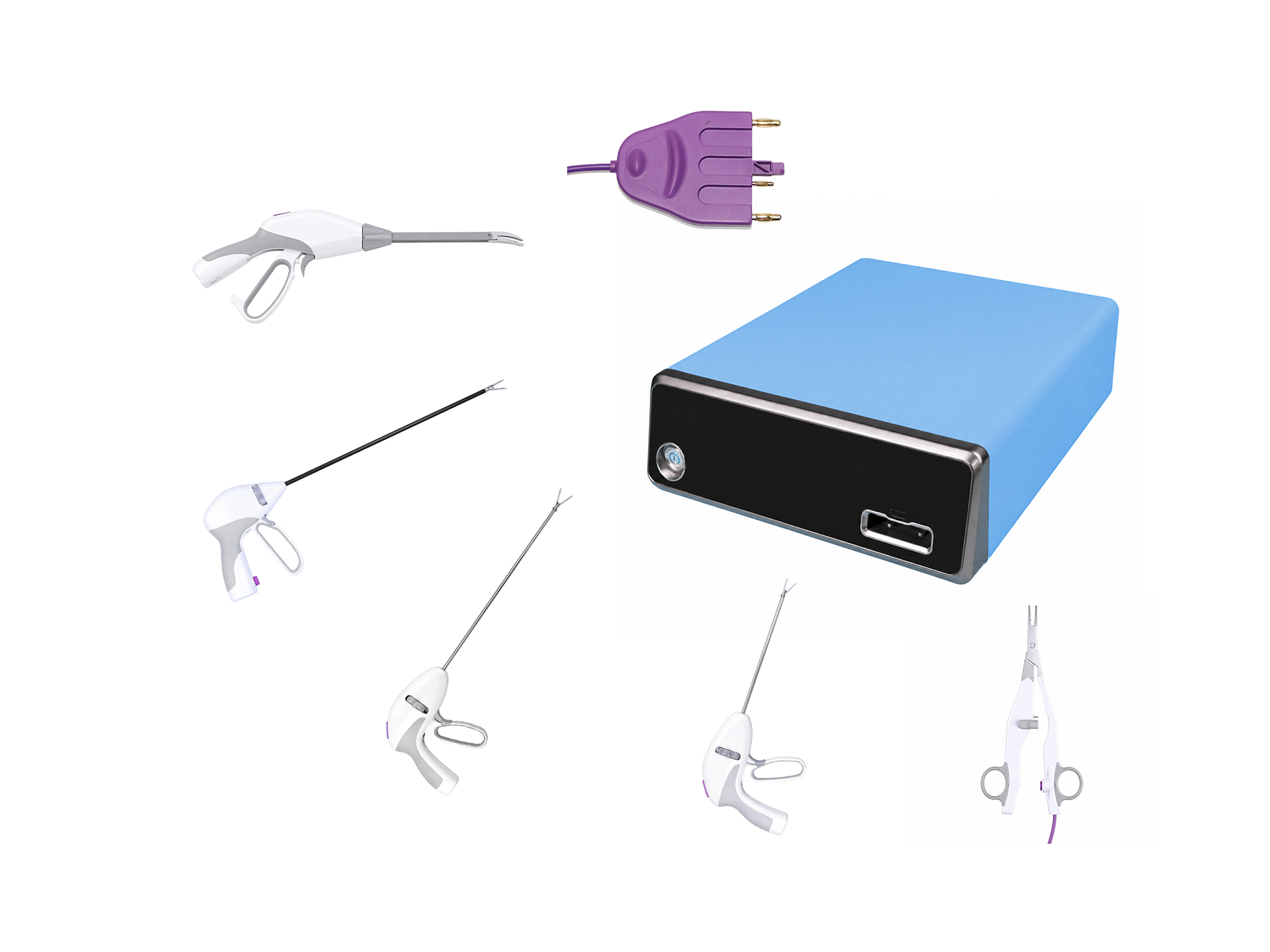
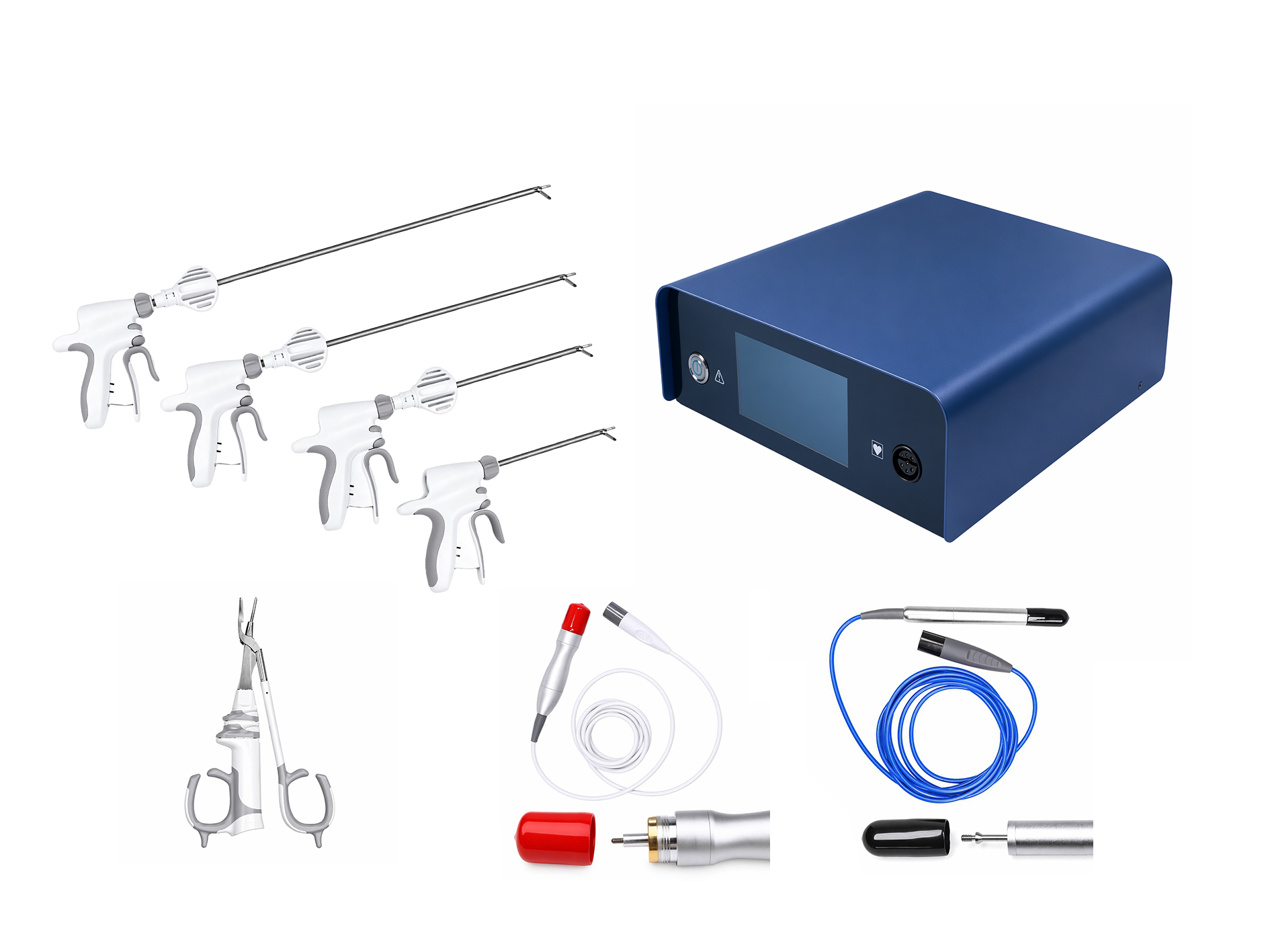
At H Group Med, our vessel sealer system is designed and validated against the major generator platforms — including the Medtronic LigaSure-compatible LS10, FT10, and Force Triad — with full burst-pressure testing on each. When used with a cable adapter kit to connect to these platforms, our instruments deliver seal performance that meets or exceeds published benchmarks for the target generator. We also offer a 3-in-1 power generator that integrates bipolar vessel sealing, ultrasonic, and monopolar/bipolar modes in a single platform, eliminating the compatibility question entirely.
For burst-pressure data, generator compatibility matrices, or technical documentation, contact our team.
LigaSure™, Valleylab™, and Force Triad™ are trademarks of Medtronic. Harmonic™ is a trademark of Ethicon. THUNDERBEAT™ is a trademark of Olympus. H Group Med is not affiliated with, endorsed by, or sponsored by any of these companies. This article is for educational purposes only and does not constitute medical advice.